
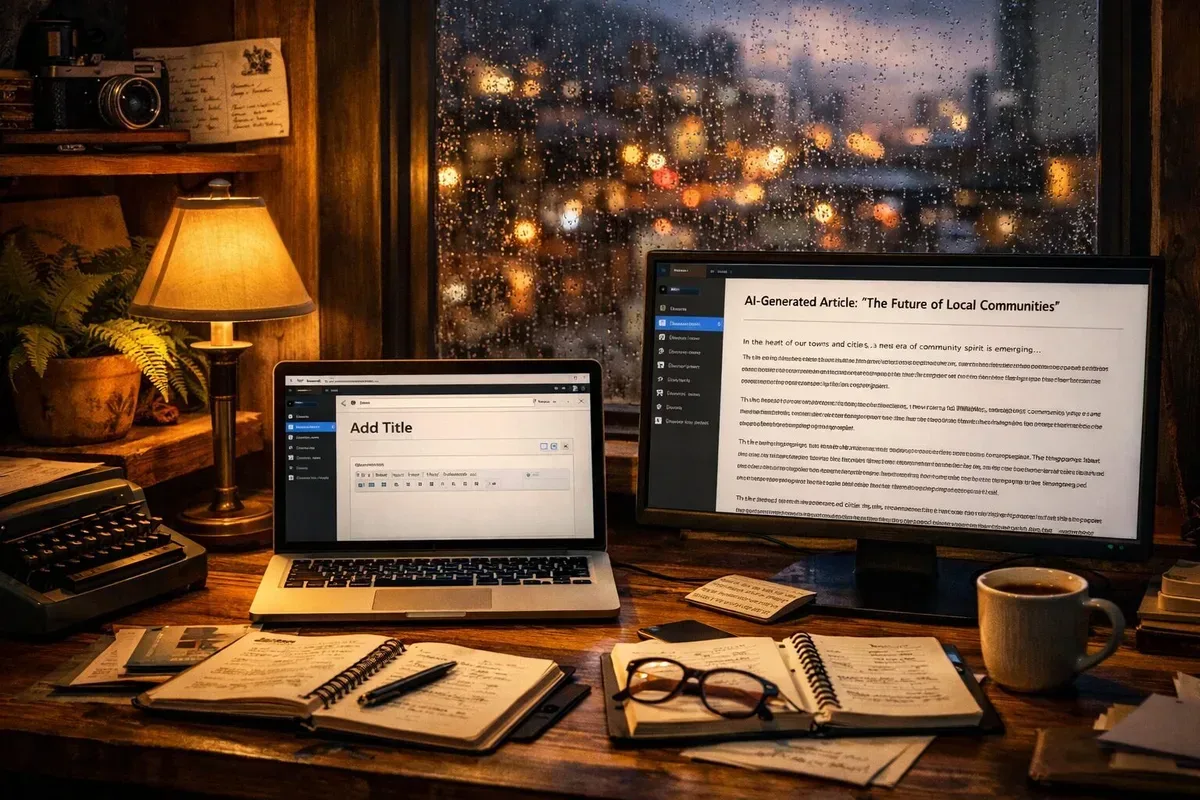
When the Machine Becomes a Quiet Curator
Most people picture auto-generated WordPress posts as robotic placeholders: bland filler that keeps a site ticking over. The surprise is how these systems are quietly becoming curators rather than mere content factories. Powered by pattern recognition and trained on diverse corpora, modern tools surface trending micro-topics, stitch local signals into global narratives and suggest angles human editors hadn’t considered.
That shift changes editorial workflows. Instead of assigning writers to find topics, editors review AI-curated clusters of ideas and decide which ones deserve craft. The result isn’t mass-produced sameness but a stream of nimble, hyper-relevant posts that match reader intent in the moment. Tools like autoarticle.net are part of this movement, offering direct WordPress and HubSpot integrations that feed editors with drafts and micro-briefs rather than blank pages.
Small Niches, Big Voices: Democratising Expertise
Auto-generation has an unexpected democratic effect: it amplifies ultra-specific expertise. Niche hobbies, local businesses and micro-communities can suddenly sustain regular publishing because creating a first draft no longer requires a specialist writer on payroll.
That means blogs about obscure crafts, regional foodways or rare tech stacks flourish. These posts often attract small but highly engaged audiences, and the AI-assisted model makes it commercially viable to serve them. For independent creators and small agencies, the technology reduces the cost of being visible and lets genuine passion projects scale their reach without losing authenticity.
The Rise of Editorial Aesthetics: Humans as Finishers
A counterintuitive effect is the renewed value of human taste. When AI handles drafting and factual scaffolding, human editors focus on tone, narrative arc and ethical nuance — the things machines still struggle with. This repositions writers as finishers: curators of voice, guardians of credibility and craftsmen of headline hooks.
In practice this produces richer content. AI produces the frame and research; humans add flourish, dissenting perspectives and contextual judgement. The end product often reads better than what either could achieve alone. Publishers discover that the fastest route to originality is not writing every word but orchestrating machine and human strengths.
Local Reporting and the Micro-Journalism Revival
Local newsrooms have been haemorrhaging staff for years. Unexpectedly, auto-generated posts are enabling a micro-journalism revival. Automated systems can compile court filings, council minutes and public data into readable briefs. Journalists then verify, add colour and follow up with deeper investigations.
This hybrid model keeps communities informed about everyday governance and niche issues that national outlets ignore. Rather than replacing journalists, automation can free them to pursue stories that require human judgement, while routine reporting is handled more efficiently. That improves civic knowledge and fosters accountability at the grassroots level.
Ethics, Authenticity and the New Gatekeeping
The convenience of auto-generated WordPress posts raises uncomfortable questions. Who is accountable when a machine repeats a bias? How do readers know a post was co-written by an AI? These challenges are shaping surprising industry practices: mandatory disclosure, AI provenance metadata and editorial audits.
Platforms and providers — including offerings like autoarticle.net — are increasingly adding provenance tags and editing logs. The unexpected effect is greater transparency in some quarters: publishers who adopt AI responsibly can earn trust precisely because they document how content was produced and edited. In short, automation is pushing the industry to confront standards it could once ignore.
SEO’s Quiet Reorientation: From Keywords to Experience
Search optimisation used to be a numbers game: keywords, links, volume. Auto-generation changes that by making scale trivial; tens of thousands of posts can be spun up with minimal human cost. Search engines respond by valuing quality signals more heavily — time on page, return visits, user interactions — forcing publishers to compete on experience rather than density.
This shift favours sites that invest in editorial design, multimedia and interactivity. Automated drafts handle the heavy lifting of coverage breadth, while humans refine the bits that keep readers coming back. The result is a healthier ecosystem: fewer SEO-stuffed placeholders and more content engineered around usefulness.
A New Career Map for Creatives
Finally, auto-generation is redrawing careers. Traditional roles — lone content writers churning posts — are giving way to hybrid jobs: prompt engineers, editorial strategists, AI trainers and quality auditors. These positions blend technical fluency with editorial instincts, offering creative professionals fresh pathways that are less grind and more strategy.
For freelancers and in-house teams alike, learning to orchestrate AI tools is now as valuable as crafting prose. The surprising upside: this creates higher-value work and often better pay for those who adapt, because the market rewards the human skills machines can’t replicate.