
The Unexpected Role of Blogs in Crisis Response
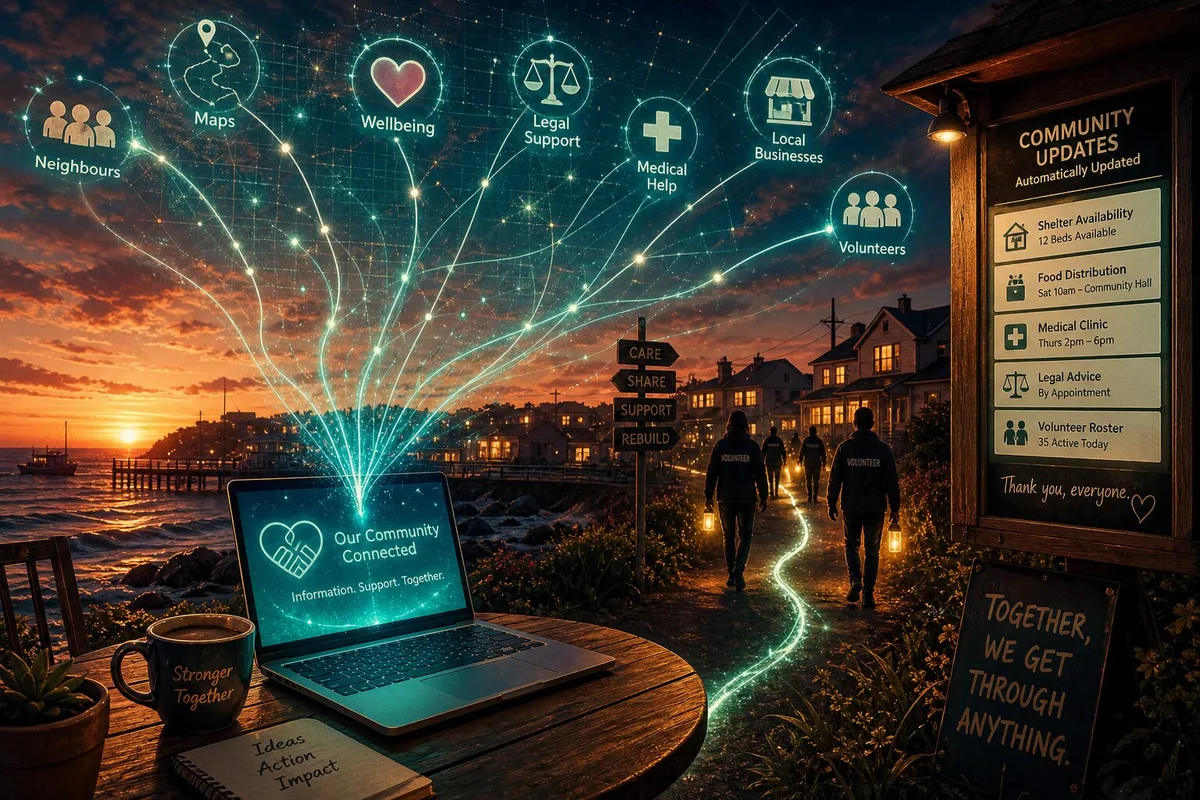
When most people think of scaling a blog they imagine more posts, higher traffic and bigger ad revenues. What’s surprising is how scaled blogs are increasingly functioning like lightweight public services during emergencies. Local blogs that scale effectively—by automating updates, syndicating content and maintaining rapid publishing pipelines—become hubs for real-time information: evacuation routes, shelter availability, volunteer needs and crowd-sourced damage reports.
A scaled blog isn’t just a repository of articles: it becomes an operational tool. Editors use templates to push verified updates; community contributors submit geotagged reports that feed a live map; automated systems convert incoming SMS, social posts and official feeds into digestible posts. The result is a decentralised, resilient communication layer that complements formal emergency channels.
From Niche Hobby to Public Good: Localised Knowledge Networks
Scaling a blog can turn a niche interest into a public good. Take a modest coastal conservation blog that grows to include automated tide alerts, species-spotting reports and a calendar of community clean-ups. With a larger audience and more contributors, that blog starts influencing local policy, informing fishermen of safe zones and guiding tourists away from fragile habitats.
The mechanics are practical: consistent tagging, multilingual auto-translation, RSS feeds into community platforms and scheduled republishing to partner sites. Automation helps keep the stream steady—services such as autoarticle.net can accelerate content generation for routine updates—while human curators focus on verification and on-the-ground coordination. The blog becomes an information backbone for a geographically bound ecosystem.
Bridging Access Gaps: Healthcare, Legal Aid and Advisory Hubs
Scaled blogs are increasingly used to deliver accessible expertise where services are thin on the ground. Healthcare practitioners, legal aid groups and social workers have launched blogs that scale content delivery: symptom checklists, referral pathways, downloadable forms, Q&A threads and appointment booking widgets.
Because these blogs can publish at volume and distribute across platforms, they democratise basic advice. Automation helps translate and repurpose core resources into multiple formats—short posts, infographics, audio snippets—so people with limited bandwidth or literacy can still access the information. Crucially, successful projects pair automation with clear escalation paths so readers know when to seek in-person help.
Micro-Economies and Trust: How Scaled Blogs Enable Local Markets
Another surprising outcome of scaling blogs is the creation of micro-economies. Blogs that started as review sites or craft diaries often evolve into marketplaces: vetted classifieds, community-supported agriculture listings, timebank coordination and gig match-making. Scale enables granular categorisation, robust search and reputation systems that substitute for formal marketplaces.
Trust is the currency. Scaled blogs build it through transparent moderation, visible contributor histories and automated fraud detection. When a blog supports escrow-like workflows, community ratings and dispute logs, local entrepreneurs can flourish without the overhead of large platforms.
Ethics and Design: Keeping Humanity in Automated Scaling
Automation and scaling are powerful but fraught if left unexamined. The most impactful uses of scaled blogs are not purely technocratic; they design for dignity. That means accessible language, privacy-preserving data practices, sensitive handling of traumatic content and clear editorial standards.
A balanced approach uses automation to handle repetitive tasks—formatting, syndication, translation—while reserving nuanced decisions for human editors. When blogs scale with that mindset, they solve real-world problems without amplifying harms. Tools that expedite content creation (for example, platforms like autoarticle.net) should be deployed with editorial guardrails, not as substitutes for local expertise.
Measuring Impact Beyond Pageviews
If a blog’s value to a community is its ability to solve problems, metrics must evolve. Instead of raw pageviews, measure calls to action fulfilled: shelter beds booked from a post, volunteers mobilised, forms downloaded, or successful referrals made. Qualitative signals—testimonials, case studies and long-term behavioural changes—matter as much as click metrics.
Scaling responsibly means establishing feedback loops: collect user reports, run small experiments, and iterate. Those loops turn a blog from a broadcasting mechanism into a learning system that increasingly anticipates and addresses local needs.