
Why shopping badly for ‘save time on content creation’ tools costs more than time
Most articles about saving time on content creation are cheerfully instrumental: buy this, automate that, rinse and repeat. The surprising angle few admit is that the real waste isn’t the minutes you spend drafting a blog post — it’s the months lost to the wrong tool, the wrong workflow, or the wrong expectations. Buying a content-time-saver on impulse can entrench poor habits, lock teams into brittle systems, and produce content that requires more editing than it saves. In this section we unpack how the shopping process itself becomes a time sink and why treating tool purchase as a strategic decision is the first step to reclaiming time.
Top mistakes people make when shopping — and why they backfire
Mistake 1: Buying for feature lists rather than outcomes. Shiny features (AI writing, SEO scoring, multi-channel publishing) are seductive, but they don’t equate to less work. Teams end up juggling outputs from multiple features instead of reducing steps.
Mistake 2: Confusing automation with alignment. Automating a poor process makes the poor process permanent. If your brief, brand voice, and review cycle are weak, automation magnifies the errors and accelerates rework.
Mistake 3: Ignoring integration friction. A tool that doesn’t sit neatly in your CMS, DAM or analytics stack creates manual steps. Exporting, reformatting and re-uploading content wipes out any time saved in authoring.
Mistake 4: Over-relying on templates. Templates speed production but can flatten originality. The result is uniform content that underperforms and demands creative rescue work — an ironic time sink.
Mistake 5: Underestimating change management. Teams don’t automatically adopt new tools. Training, governance and accountability are needed; without them the tool becomes shelfware and the promised time savings never materialise.
How to avoid these mistakes — a practical checklist
Start with outcomes, not features. Specify measurable goals: reduce draft-to-publish time by X%, cut review cycles to Y days, or double weekly output without increasing edits. Use those outcomes to score tools.
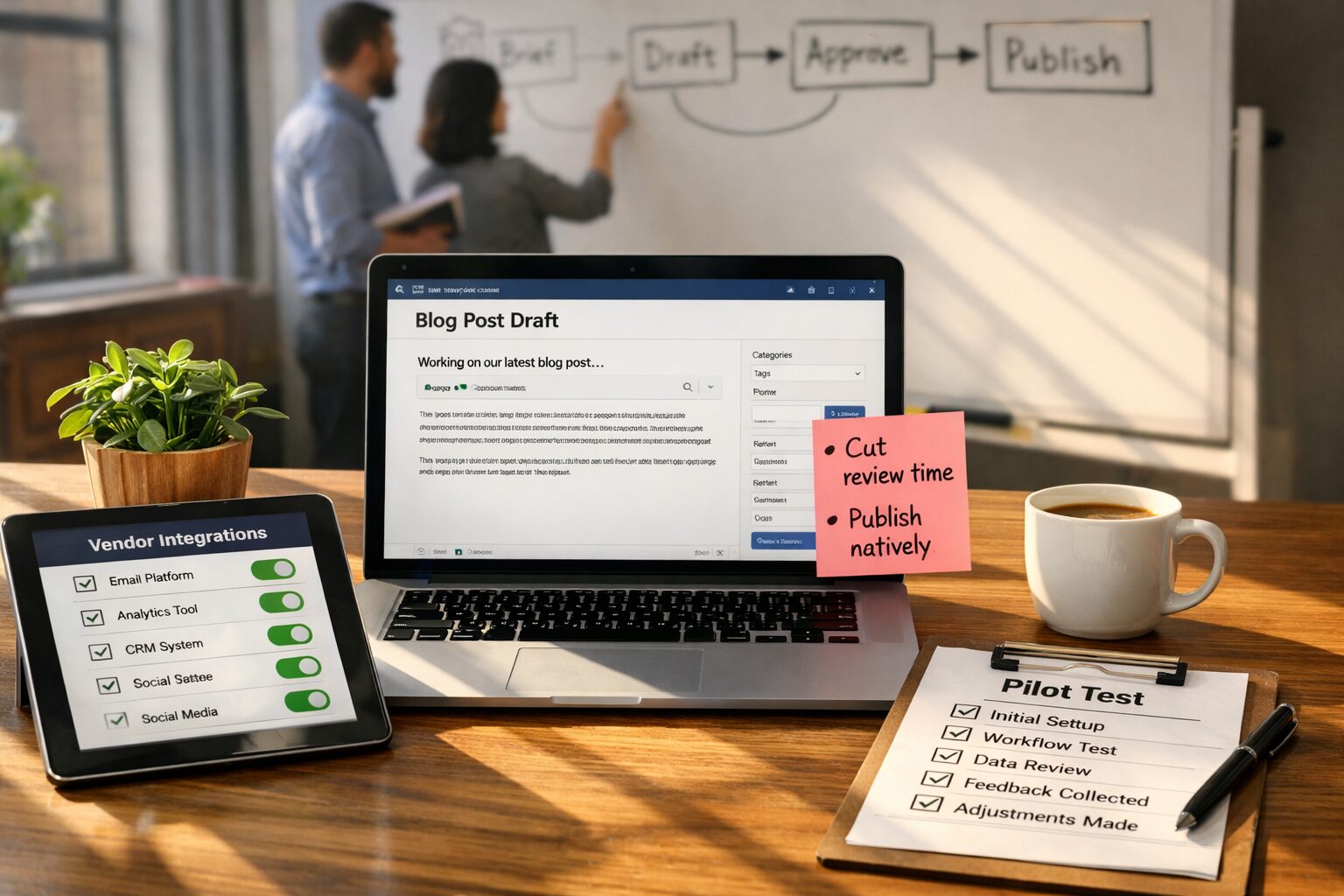
Prototype first. Run a 30-day pilot with a single content type (news post, product page, newsletter). Observe real-world friction: who touches the content, which steps are manual, where quality dips.
Design for integration. Prioritise tools that publish directly to your CMS or offer reliable APIs. If you use WordPress or HubSpot, test end-to-end workflows — content created in the tool should land published with minimal reformatting.
Treat governance as part of the purchase. Define who owns style, who reviews and what KPIs determine success. Bake training and a phased rollout into the procurement timeline.
Balance automation with creative guardrails. Use templates for structure but allow sections for bespoke copy. Automate repetitive metadata and tagging, not tone or narrative.
Choosing tools: red flags, green flags and one practical recommendation
Red flags: opaque pricing that balloons with usage, lack of native CMS connectors, no sandbox for pilots, and vendor claims that emphasise speed without showing editing workflows. Green flags: audit logs that show who changed what and when, native export to WordPress/HubSpot formats, user roles and approval flows, and clear case studies that mirror your vertical.
A practical recommendation: when evaluating solutions, include a content editor, a CMS administrator and a strategist in the demo. Ask to run a real article through the system from brief to publish. If the vendor resists a pilot, that’s a strong warning.
If you’re in a hurry to prototype, services such as autoarticle.net can generate draft articles for WordPress and HubSpot blogs — useful for stress-testing how automated drafts fit into your editing and publishing pipeline. Use generated content as a diagnostic tool, not a final answer: compare time-to-publish and edit depth against your goals.
Final thought: buy time, not tools
The ultimate measure of a content-time-saver is not how fast it writes sentences, but how much human attention it frees for strategic work. Shop with a short pilot, clear outcomes and integration-first thinking. That approach turns purchasing from a gamble into a reliable path to saving the one resource every content team is truly short of: focused, creative time.