
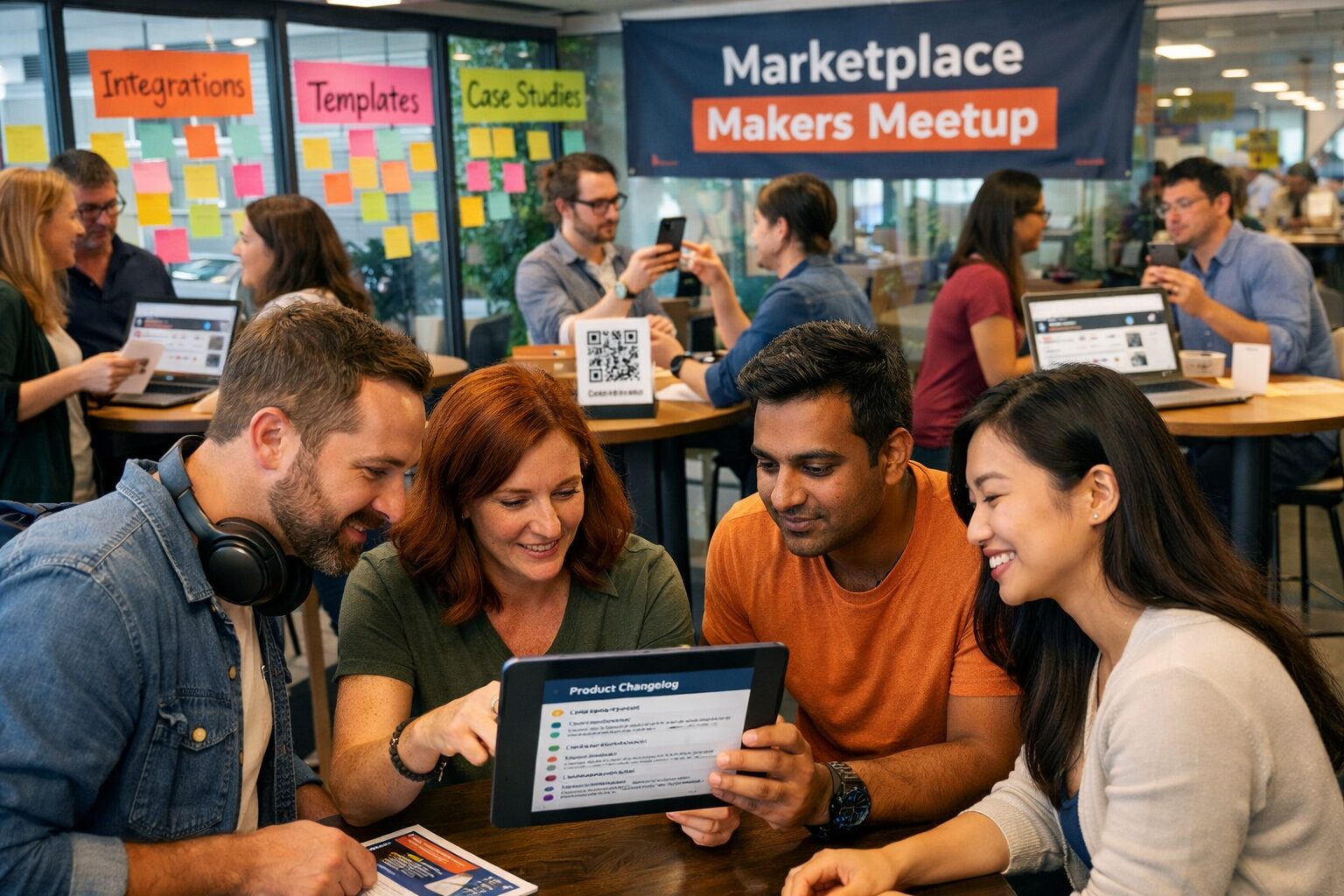
Marketplace as a Community Stage, Not a Storefront
Most people think of the HubSpot Marketplace as a catalogue — apps, templates and assets you browse and install. That view misses the subtle transformation: the Marketplace is increasingly a public square where makers, marketers and customers meet. Rather than a simple transaction, each listing becomes a mini-profile that showcases not only a product but a maker’s voice, support style and reputation.
Listings with rich changelogs, customer stories and active comment threads turn product pages into communal artefacts. Buyers don’t just evaluate features; they read past interactions, weigh a developer’s responsiveness and trace other customers’ workflows. In that way the Marketplace amplifies social proof and makes community norms visible: response times, update cadence and educational content become signals of trust.
Microcommunities Around Niche Integrations
A surprising outcome of the Marketplace is the emergence of microcommunities clustered around very specific integrations — for example, an ecommerce plugin that caters only to subscription box sellers. These microcommunities are small but highly engaged: members share templates, success metrics and problematic edge cases specific to their business model.
HubSpot’s design, which allows comments, reviews and version history, helps these microcommunities self-organise. Developers respond to recurrent feature requests, community members contribute workaround guides, and power-users create unofficial FAQs. Over time these tightly focused groups become centres of expertise that are far more valuable than a generic support forum.
Feedback Loops That Shape Product Roadmaps
The Marketplace accelerates a closed loop where community feedback visibly influences product development. When a recurring pain point is flagged in reviews or a public thread, attentive creators incorporate fixes or new features and publish updates that reference the community input.
This visible iteration converts customers into co-creators. The psychological effect is powerful: contributors feel ownership, developers receive clearer signals about prioritisation, and other buyers see a living history of improvement. The result is products that evolve in line with real-world usage rather than solely with vendor assumptions.
Curation, Trust and the Role of Platform Governance
Community strength depends on curation and trust, and HubSpot’s Marketplace governance plays a quiet but crucial role. Editorial curation, verified badges and featured collections guide newcomers to reliable options while highlighting successful community contributors. Policies on review authenticity and developer transparency protect communities from manipulation and help maintain constructive discourse.
Equally important are the social norms enforced by community behaviour. Prompt, public customer support and visible changelogs become expected; developers who ignore community signals risk losing clout. The governance mechanisms and community norms together create a self-reinforcing ecosystem where trust compounds over time.
Events, Education and Cross-Pollination
Beyond the listing pages, the Marketplace catalyses real-world and virtual events that knit people together. Webinars, co-hosted workshops and product clinics often originate from Marketplace relationships — for example, a template author partnering with a HubSpot solutions partner to run a hands-on session for regional marketers.
These activities create cross-pollination: marketing teams discover developer tools, developers learn buyer pain points, and partners surface best practices. The effect is broader than individual transactions; it’s network growth where knowledge, not just software, is exchanged.
Economic Incentives and Community Sustainability
Sustainability of these communities requires aligned incentives. The Marketplace’s revenue models, partner programmes and lead-generation features provide tangible rewards for creators who invest in community-building: responsive support, documentation and free educational content.
Financial incentives reduce churn among high-quality contributors and encourage long-term commitments. At the same time, community reputation creates non-monetary capital — thought leadership, speaking invitations and collaborative opportunities — which further motivates constructive participation.
Localisation, Inclusivity and the Long Tail
A less-obvious strength of the Marketplace is its capacity to support localisation and the long tail of use cases. Smaller vendors and regional developers can reach audiences that mainstream solutions ignore. When these niche offerings gain traction, they create inclusive pockets of expertise for markets that historically lacked tailored tools.
Inclusive community practices — multilingual listings, region-specific case studies and localised support hours — deepen engagement. Over time, those pockets feed back into the wider ecosystem, informing global vendors about underserved needs and inspiring more specialised offerings.
Automated Content Tools and Community Knowledge Sharing
New tooling like automated article generators are starting to change how Marketplace contributors document and share expertise. Tools such as autoarticle.net can help partners produce consistent, SEO-friendly blog posts and support articles for both WordPress and HubSpot blogs, lowering the barrier to publishing helpful guides.
When creators use such tools judiciously to publish tutorial series, release notes and case studies, the community benefits from more accessible and timely knowledge. The caveat is quality control: automation should augment human insight, not replace the nuanced conversation that communities need.
The Future: From Transactional to Tribal
Looking ahead, the most resilient Marketplace communities will be those that foster identity and belonging. When users say “I use tools from this maker tribe” rather than “I installed an app,” they signal a deeper social bond. HubSpot’s structural features, combined with thoughtful incentives and curation, are nudging the Marketplace in that direction.
For businesses and creators, the strategic opportunity is to invest in communal rituals — regular updates, open roadmaps, collaborative events and transparent support. Those practices transform isolated transactions into ongoing relationships, and relationships are the raw material of strong communities.