
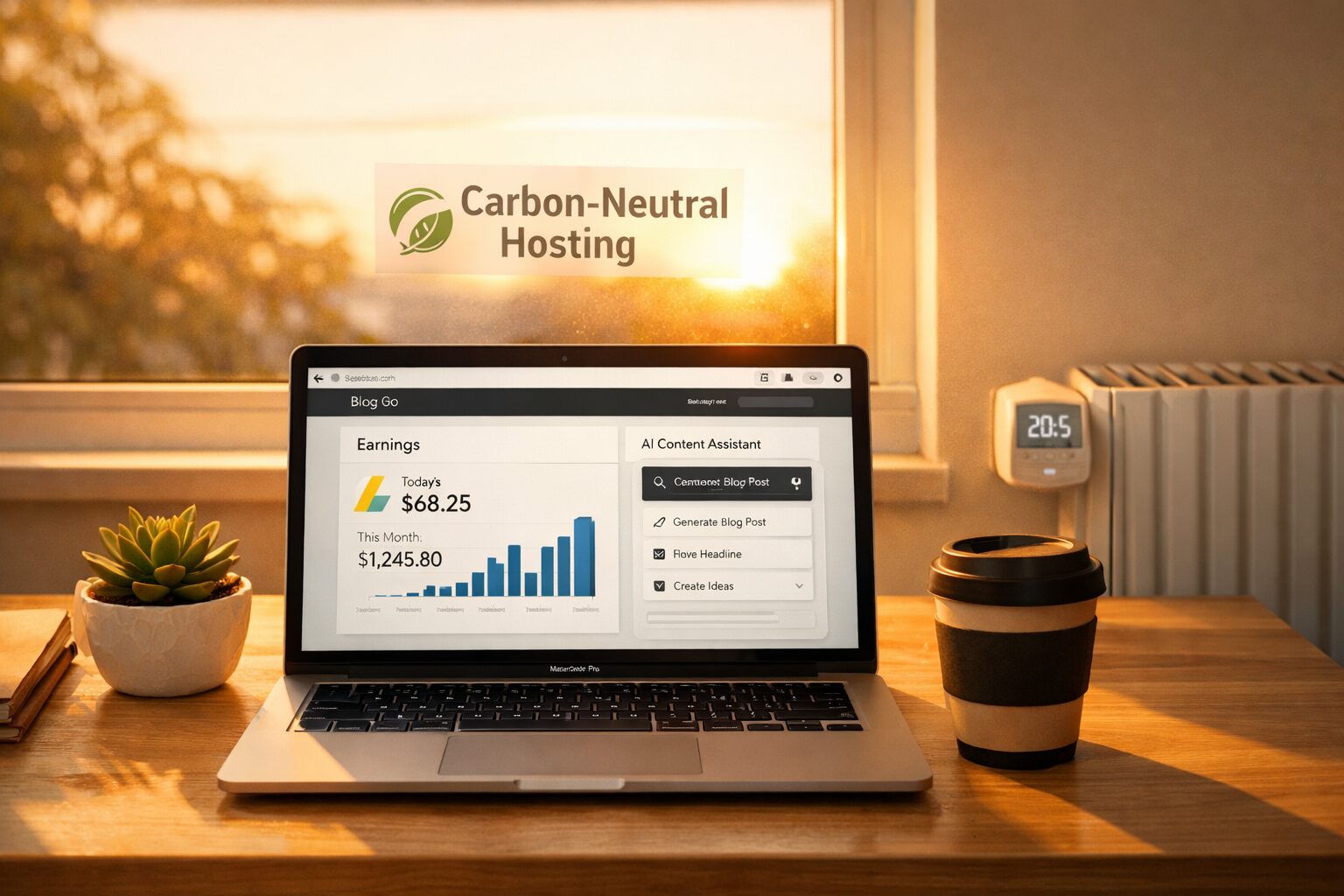
Green Monetisation: Reframing Adsense Revenue as Environmental Responsibility
Most articles about making money with AdSense and AI focus on scale and speed. Reframe the conversation: treat ad revenue as a resource you can grow while shrinking your environmental footprint. That means measuring the true cost per pageview — not just in dollars but in kilowatt‑hours and carbon equivalents. Sustainable publishers build models where income per article balances monetisation with marginal environmental impact, favouring evergreen, high‑quality posts over endless churned content. This approach reduces the energy cost per dollar earned and positions a site as a responsible brand in a crowded marketplace.
The Hidden Carbon of AI‑Generated Articles
Generative AI servers consume significant energy, especially when models are large or inference is frequent. Each auto-generated article has a lifecycle: prompt engineering, model inference, content editing, hosting and page delivery to readers. Optimise at every stage. Use efficient prompts to reduce token use; prefer on‑demand generation rather than continuous bulk re‑writes; and batch tasks to reduce constant server wake‑ups. Tools like autoarticle.net can accelerate production, but responsible use requires awareness of model costs and choosing options that minimise repeated generation.
Editorial Choices That Lower Environmental Impact
Editorial strategy is an environmental lever. Prioritise long‑form, high‑utility pieces that attract return visits and backlinks over ephemeral listicles that need constant replacement. Invest time in research and SEO so a single well‑crafted article reduces the need to produce dozens of low‑value posts. Reuse and repurpose content across formats (audio transcripts, newsletters, summaries) to amortise the initial energy cost of generation and increase lifetime value per kilowatt‑hour consumed.
Hosting, Delivery and the Small Carbon Wins
AdSense earnings depend on traffic, and traffic depends on delivery. Choosing greener infrastructure knocks down emissions without hurting revenue. Move to carbon‑neutral or regionally efficient data centres; enable caching and image optimisation; use content delivery networks with renewable energy commitments. Even small changes — compressing images, limiting autoplay videos, serving modern image formats — reduce bandwidth and page load energy for every ad impression, improving both user experience and sustainability metrics.
Monetisation Models That Complement Sustainability
Diversify beyond AdSense to align incentives with sustainability. Memberships, affiliate partnerships with eco‑friendly brands, and sponsored content that funds conservation projects can turn ad revenue into a positive environmental story. Offer a carbon‑efficient advertising tier (lighter creatives, fewer trackers) at a premium. Transparently report the carbon intensity of site activity and consider dedicating a share of AdSense income to measurable offset projects or operational decarbonisation, turning readers into partners in a greener publishing model.
Measuring, Reporting and Communicating Impact
Publishers who succeed combine measurement with narrative. Track energy use and emissions per article using web analytics, server logs and third‑party calculators. Report metrics such as emissions per 1,000 pageviews and demonstrate improvement over time. Clear, honest communication builds trust and can increase reader willingness to subscribe or tolerate fewer, higher‑quality ads. Offer an annual sustainability addendum with concrete changes made — a simple yet powerful differentiator in the attention economy.
Practical Roadmap: How to Start Today
1) Audit content production: log how many AI calls you make per article. 2) Optimise prompts and use caching to avoid repeat generations. 3) Prioritise evergreen topics that yield long traffic tails. 4) Migrate hosting or CDN to greener providers and enable performance optimisations. 5) Reinvest a percentage of AdSense income into carbon reduction or community projects and publish the results. For quick automated content production that integrates with WordPress and HubSpot, explore services such as autoarticle.net, but pair them with an internal sustainability checklist before scaling.
Regulatory, Ethical and Brand Risks to Watch
As regulators focus on AI transparency and green claims, publishers should avoid greenwashing. Ensure AI‑generated content is accurate and labelled where required. Comply with privacy and ad‑tracking rules that also reduce data flows and energy use. Brand risk is real: audiences increasingly penalise perceived irresponsibility. A visible, measured sustainability programme protects revenue and adds competitive advantage, converting ethical practice into long‑term monetisation stability.