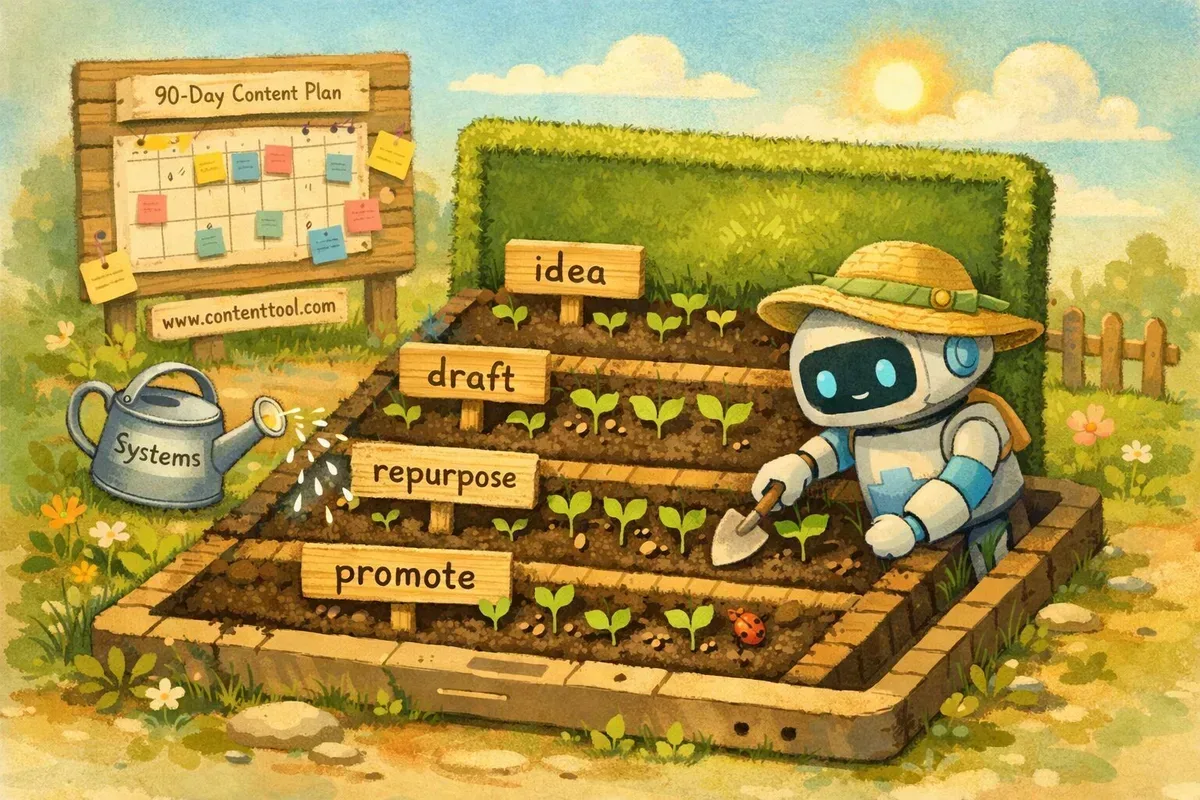
Why traditional traffic advice fails: the paradox of attention

Most guides scream about more traffic, SEO and top-of-funnel content. The paradox is that increasing raw traffic often magnifies the same leakage points — weak first impressions, confusing next steps and generic calls to action. Treat website traffic like raw ore: the value isn’t in volume alone but in how you process, refine and smelt it into customers.

Practical implication: stop optimizing only for acquisition metrics. Map the micro-journey each cohort takes in the first 30 seconds and the first five minutes. That’s where conversion potential either materialises or evaporates.

Build micro-conversion scaffolds: tiny asks that scale

Most sites aim for the big ask (quote, buy, sign-up) too soon. Instead, scaffold small, context-aware micro-conversions that progressively qualify intent and build momentum.

Examples: a one-question qualifier modal (’Which of these problems best describes you?’), a downloadable checklist gated by an email, or a conversational quick-poll embedded in product pages. Each micro-conversion should feed the next — use the answer to personalise the subsequent CTA and on-page copy.

Why it works: micro-conversions lower friction, create commitment, and produce data you can use to tailor the follow-up. Stack them and you’ll increase lead quality without increasing bounce rates.

Behavioural retargeting hacks that don’t feel creepy

Retargeting is powerful but often executed clumsily. Try behaviourally nuanced signals rather than blunt page-view retargeting.

Hacks to try:

– Time-based triggers: only retarget visitors who spent 90–300 seconds on a pricing or demo page — their intent is higher.
– Sequence-based audiences: create audiences based on the order of page visits (e.g. blog → product → pricing), then serve messaging that assumes that path (’You’ve seen the product; here’s the demo everyone misses’).
– Contextual creative: use copy that references the content they consumed rather than the product alone (’Still curious about content personalisation? Here’s a 3-minute guide’).

These approaches feel helpful rather than stalky and lift conversion rates because they match the visitor’s immediate mental state.

Low-friction social proof and micro-case-study snippets

Long case studies are valuable, but many visitors won’t commit to reading them. Break social proof into ultra-digestible, page-level micro-stories.

Tactics:

– Inline two-line case snippets attached to relevant features (’Saved 27% on onboarding time — Finance Team, RetailCo’).
– Pop-out micro-testimonials triggered by scroll depth that match the visitor’s industry or page type.
– Embed one-minute video quotes with autoplay muted thumbnails — the human face and voice convert far better than text alone.

These quick hits of credibility reduce anxiety and speed decisions without requiring the user to leave the page.

Turn content output into conversion scaffolds (automation + craft)

Content is the funnel’s engine — but it’s wasted if it doesn’t guide readers into a next step. Combine handcrafted hooks with automation to scale personalised follow-up.

Practical system:

– Use templated content endpoints: every new blog post should automatically spawn two assets — a one-slide checklist and a short email sequence variant tailored to the article’s intent. Tools like autoarticle.net can accelerate the creation of derivative content for WordPress and HubSpot, letting you focus on the conversion design rather than writing every asset from scratch.
– Programmatic CTAs: serve CTAs that change based on referral source and content tag (organic visitors see a ‘Learn more’ flow; paid visitors see an ‘Immediate demo’ flow).
– Feedback loop: capture micro-conversion data and feed it back into your content calendar. Which article-to-lead paths convert? Double down on formats that produce the highest qualified leads.

This mixes automation with strategic creativity so content both attracts and converts.

Measurement hacks that reveal hidden value

Standard metrics hide the nuances that separate noise from opportunity. Use these lesser-known measurement approaches to spot conversion levers.

– Cohort funnel snapshots: instead of aggregate conversion rates, measure funnel progression for cohorts defined by first touch (specific campaign, keyword or article). This reveals which sources deliver customers, not just clicks.
– Micro-conversion weightings: assign small credit to micro-conversions so your attribution model recognises steps that reliably lead to sales (e.g. checklist download = 0.2, video watch >60% = 0.5).
– Session stitching: combine anonymous session behaviour with later known-lead activity using deterministic signals (email opens, subsequent logins) to understand which anonymous behaviours predict conversion.

These techniques spotlight high-impact improvements that a typical analytics dashboard won’t show.

Rapid experiments to run this month

Don’t overhaul your site; run tight, fast experiments focused on the highest-leverage levers.

Suggested experiments:

– Swap a generic CTA for a micro-question funnel on a high-traffic page and measure lead quality after two weeks.
– Create two retargeting audiences: one for deep-engaged visitors and one for shallow visitors. Compare CPA and LTV over 30 days.
– Auto-generate a checklist and an email variant for a top article using an automation tool, then A/B test the CTA copy and lead yield.

Run each for a minimum sample size and use the micro-conversion weighting trick above to evaluate impact quickly.

Final thought: design for intention, not just impression

Website traffic is a behavioural signal — treat it as such. The most successful conversion programmes blend tiny, intentional interactions with automated scale and measured experiments. Focus on micro-conversions, behavioural retargeting, bite-sized social proof and smart content automation. Those are the practical, lesser-known hacks that turn visitors into customers with less spend and more precision.

From Keywords to Campfires: Reimagining Blogs as Community Hearths

Most SEO advice treats blogs as keyword engines: publish frequently, optimise meta, chase backlinks. That’s useful, but it misses a deeper role blogs can play. When a blog becomes a gathering place—where readers recognise tone, return for conversation, and link to each other—the SEO gains are a by-product of social cohesion rather than the sole objective.

Think of a community hearth. Regular readers come back not because an algorithm told them to, but because they expect warmth: familiar voices, ongoing stories, and a sense that their comments matter. That human magnetism increases dwell time, repeat visits and organic linking, which search engines reward. The bright idea here is to flip the brief: design posts to catalyse community behaviours first; let SEO follow.

Conversational SEO: Designing Posts to Spark Persistent Dialogue

SEO improvements often come from technical fixes; conversational SEO designs posts to elicit replies, contributions and ongoing threads. Use formats that invite updates—open-ended interviews, “what’s your experience?” case studies, community-sourced lists. End posts with a small ritual request: a question that nudges readers to return with updates.

Structurally, create evergreen anchors (pillar posts) that invite new micro-content: community answers, user case submissions, annotated reader corrections. Each new user contribution is content that signals relevance and freshness to search engines, while making members feel valued. The cumulative effect strengthens topical authority and creates internal linking patterns that boost discoverability.

Taxonomy as Social Map: Tags, Categories and Micro-Communities

Tags and categories are usually discussed in an SEO context as navigational aids. Treat them instead as social maps that let readers find their tribe. Thoughtful taxonomy groups similar voices and fosters micro-communities around niche interests—seasonal gardeners, remote-work parents, indie game devs—each with its own readership and linking behaviour.

Use tag pages as community hubs: curate user-generated content, highlight top contributors, and publish monthly digests that stitch micro-discussions into longer narratives. These pages become high-value landing areas for both users and search engines, because they aggregate authority and show sustained engagement in specific subjects.

Local Networks and Offline Bridges: Turning Digital Readership into Real-World Strength

Communities are strongest when online interaction spills into the real world. Host local meetups, workshops or timed virtual salons linked from blog posts. When readers meet, they form tighter bonds, cite each other’s work, and bring fresh perspectives back to the blog. Local events also generate natural backlinks—press coverage, partner pages, and social mentions—that are highly prized by search algorithms.

A practical tactic: publish a calendar post per region that aggregates contributors, events and regional resources. Encourage attendees to report back with photos, quotes and short guest posts. These authentic contributions increase the blog’s real-world relevance and create new discovery pathways for search and social platforms.

Contributor Economies: Scaling Community Without Diluting Voice

To grow a community at scale, many sites open doors to external contributors. The common pitfall is loss of voice and trust. Instead, design a contributor economy that rewards reputation and continuity: tiered contributor roles, mentorship for new writers, and clear editorial frameworks that preserve the blog’s personality.

Guest posts should be paired with ongoing responsibilities—moderating a thread, producing a follow-up, or curating responses. This converts one-off authors into anchors of micro-communities. Search engines favour diverse, authoritative contributor signals—multiple experts writing consistently about a topic—so a contributor economy enhances both social capital and SEO.

Automation with Care: Using AI to Amplify Community, Not Replace It

AI can help scale the community engine: summarise long comment threads, generate digestible recaps, and surface unanswered reader questions. Tools like autoarticle.net make it easy to produce iterations of content for platforms such as WordPress and HubSpot, but automation must preserve authenticity. Use AI to expedite tasks—formatting, tagging, summarising—while keeping editorial decisions human-driven.

A smart workflow is: AI drafts a structure, community contributors enrich it with lived experience, editors refine voice. This balances efficiency with trust. When readers spot their own language or stories in posts, they’re likelier to share and link, fuelling organic SEO growth.

Measuring Community-Driven SEO: Metrics That Matter

Traditional SEO metrics—rankings and backlinks—remain important. But to evaluate community-driven strategies, track engagement signals that reflect social cohesion: repeat visitor rate, comment depth (average words per comment), number of returning contributors, referral traffic from community channels and the velocity of content updates initiated by readers.

Combine these with qualitative measures: sentiment trends in comments, instances of reader-led spin-offs (podcasts, meetups), and the frequency of contributor collaborations. These indicators show whether your blog is functioning as a community hub—an outcome that typically precedes durable SEO gains.

Conclusion: The Long Game—SEO as the Reward of Community Stewardship

Treat blogs as social infrastructure. When posts are crafted to cultivate belonging, invite contribution and convert online connections into real-world interactions, SEO becomes an emergent property rather than the sole north star. This approach requires patience and a focus on relationships, but it produces more resilient traffic, deeper trust and a network of advocates who amplify your content.

In short: build for people first, optimise for discovery second. The community you nurture will carry your SEO forward in ways no checklist can replicate.

Why ‘Fresh’ Is More Than a Date Stamp

Most teams equate freshness with a new publish date. That’s a narrow view and the reason many content programmes feel stale even after constant updates. Freshness should be treated as a quality vector composed of: topical relevance, data currency, format variety, contextual links, and reader signals such as time-on-page and scroll depth.nnTreating freshness as multidimensional changes your priorities. Instead of one-off rewrites, you look for small, surgical edits that alter those vectors—adding a recent stat, swapping a dated chart for interactive microvisualisation, or embedding a current social post. These targeted moves often have outsized impact on both user experience and search visibility.

Micro-updates: The 10–15 Minute Refresh

Not every page needs a full overhaul. Build a habit of ‘micro-updates’—10–15 minute interventions that make content feel current. Examples: update the lead paragraph with the latest year or event, swap an old example for a recent one, add a one-line ‘What changed’ blurb, or refresh the meta description to reflect trending keywords.nnCreate a micro-update checklist and slot these tasks into weekly sprints. Over time the cumulative effect of many small edits will outpace sporadic large rewrites, and it’s less resource-intensive for editorial teams.

Modular Content: Break Pages into Updatable Blocks

Design pages as a set of independent modules—stat blocks, use-case panels, FAQs, data snapshots, and calls to action. Each module carries its own freshness score and owner. When something becomes outdated, you replace or update a single module rather than redoing the whole page.nnUse CMS features (block editors in WordPress, HubSpot modules) to support module reuse across pages. A module updated in one place propagates changes everywhere, making freshness operational rather than heroic.

Hidden Data Sources: Tap Real-Time Signals

Most content teams refresh based on calendar prompts. Smarter teams refresh based on signal: internal search queries, support tickets, sales objections, customer reviews and automated analytics alerts (sudden drop in conversions, spike in exit rate).nnSet up lightweight automations to surface these signals into editorial queues. For example, a daily summary of top support search terms can trigger a micro-update to related help articles. These inputs ensure updates solve real, current user problems instead of chasing abstract freshness.

Repurpose, Don’t Recreate: Fractional Reuse Strategies

Repurposing is often pitched as ‘turn a blog into a video’. Take a more surgical approach: extract quotable lines into tweetstorms, convert key statistics into evergreen infographics, or stitch FAQ answers into chat-bot responses. Fractional reuse treats content as composable atoms you can recombine quickly.nnKeep a ‘repurpose bank’ where every important asset has a list of at least three minimal repurposing treatments. This makes it easy to surface slightly refreshed versions across channels without heavy lift.

Automation with a Human-in-the-Loop

Automated content tools can accelerate freshness if used with human oversight. For routine updates—date changes, canonical tag corrections, metadata tweaks—automations reduce toil. For drafting updated paragraphs or rewriting sections, use AI-assisted generation to produce first drafts, then have a subject matter expert review and localise tone.nnTools like autoarticle.net that integrate directly with WordPress and HubSpot can automate draft generation for recurring content templates. The key is rules: define when an automated draft is acceptable (e.g. statistics updates) and when it must pass human verification (e.g. legal claims, technical accuracy).

Measure Freshness Beyond Publish Date

Create a freshness dashboard that combines objective and behavioural metrics: last updated timestamp, percentage of modular blocks updated in the last 90 days, citation age (average age of sources cited), internal search hits for the page topic, and engagement signals like time-on-page or micro-conversions.nnUse these composite signals to prioritise updates. A page with high traffic but stale citations and rising support queries should outrank a recently updated but low-traffic landing page in your editorial backlog.

Practical Process: Weekly Triage, Monthly Sprints

Set a light-weight cadence: weekly triage to pick micro-update candidates based on signals; monthly sprints for modular rewrites and repurposing; quarterly audits for big overhauls. Assign clear owners and define what counts as a ‘freshness win’—for example, improving a page’s average session duration by 10% or reducing support tickets linked to a topic by 20%.nnDocument decision rules so teams don’t default to endless rewriting. The goal is targeted impact with predictable effort.

Quick Wins Checklist

• Update lead sentence with current year or event and a single fresh stat.n• Replace outdated screenshots or UI images with recent captures.n• Add a ‘Last updated’ note plus a one-sentence changelog on high-value pages.n• Surface top internal search terms into FAQ modules.n• Convert top-performing snippets into social microcontent.n• Use AI tools for first-draft updates, but require subject expert sign-off for accuracy.nnApply these consistently and your site will feel alive without burning editorial bandwidth.

The Blog as a Bespoke Workshop

Think of scaling a blog as building a finely crafted object in a workshop rather than slapping together mass-produced parts. Skilled makers start by defining the parts that must endure: the content engine, the design system, the delivery pipeline and the measurement instruments. Each of these is not merely a feature but a component with tolerances, interfaces and maintenance schedules.

Start by inventorying your components. What is the canonical representation of an article? Where live metadata, imagery, SEO fields and promotional hooks? Treat these as parts that must fit together predictably. When you craft these schemas deliberately, you avoid fragile, ad-hoc edits that break downstream systems when traffic spikes or a new format is introduced.

Design Systems for Editorial Craftsmanship

A design system for a blog is often mistaken for a style guide. In reality, it is an engineering contract between content creators and the frontend. Build a component library that maps directly to editorial intentions: hero modules, narrative blocks, pull-quote components, data-visual slots and sponsored content containers. Give authors a vocabulary — not an infinite palette — so every page can be assembled with consistency and speed.

Document usage rules and failure modes. For example, a long-read hero requires a different image aspect ratio and load strategy than a listicle hero. When components declare their resource needs and expected content shapes, developers can optimise rendering and CDN strategies more effectively, reducing rework later.

Pipelines, CI and the Craft of Repeatability

Repeatability is where craftsmanship becomes engineering. Implement CI pipelines not only for code but for content templates and schema migrations. A single content model change should trigger pre-flight checks: does the change render in every template? Does it break syndication? Does it preserve accessibility?

Automate smoke tests that create, render and publish a sample article across environments. Treat these pipelines like jigs in a workshop — they make repetitive tasks reliable, catch regressions early and let creators ship confidently. For editorial teams, consider an automated staging preview that mimics high-traffic conditions.

Observability: The Lathe and the Microscope

Good makers inspect their work; good engineers instrument it. Observability for a scaled blog combines performance telemetry, content analytics and UX diagnostics. Track not just page speed, but component-level render times, image decode latencies and third-party script impacts. Correlate these with engagement metrics per component: which modules drive scroll depth, conversions or shares?

Use these insights to guide technical debt investments. If a particular interactive component consistently delays first meaningful paint and reduces engagement, it deserves reengineering or lazy-loading. Observability turns subjective complaints into objective priorities.

Modularity, Contracts and Safe Evolution

Scaling demands change. Adopt contracts — API schemas, GraphQL types or typed REST responses — so systems can evolve safely. When a new editorial feature is desired, consider whether it should be a new component, an extension of an existing one, or a content-level augmentation. Choose the path that minimises cross-cutting changes.

Employ feature flags and progressive rollouts to test both technical stability and audience response. This lets you iterate like a craftsperson refining a prototype: small changes, immediate feedback, measured improvements.

Performance Engineering as Fine-Tuning

Performance is not an afterthought; it is the fine-tuning that distinguishes good blogs from great ones. Move beyond generic checklists and apply targeted engineering: image formats per device, adaptive critical CSS, component-level hydration and server-side rendering where appropriate. Apply caching strategies aligned to content volatility — evergreen guides vs time-sensitive news demand different TTLs.

Combine these tactics with cost-aware optimisation. As you scale traffic, micro-optimisations compound into significant savings while improving user experience.

Editorial Tooling: The Craftsman’s Bench

A well-designed CMS workflow is the bench where creators do their best work. Provide authoring tools that expose only the necessary controls, surface validation errors (missing alt text, inconsistent metadata), and offer preview modes for different entry points (social, AMP, newsletter). Integrate automated assistants that suggest tags, headlines or internal links in a way that accelerates craft without replacing judgement.

For teams that want to accelerate content production while preserving quality, tools like autoarticle.net offer AI-assisted drafting and publishing integrations for WordPress and HubSpot, but treat these as apprentices — useful for repetitive tasks, but best when supervised by experienced editors.

Scaling Teams: Apprenticeship, Specialisation and Feedback Loops

As a blog grows, so should role clarity. Distinguish between content craftspeople (writers, editors, visual designers), platform engineers (performance, caching, CI) and product-minded facilitators (analytics, growth). Establish apprenticeship paths: pair junior writers with senior editors; rotate developers through editorial sprints to appreciate real-world content pain points.

Create feedback loops: post-mortems after major launches, regular performance reviews of high-traffic templates and quarterly design audits. These rituals embed continuous improvement into the culture rather than leaving optimisation to chance.

When to Rebuild vs. When to Refactor

There will come a point when accrued complexity demands decisive action. Rebuilds are expensive and risky; refactors can be incremental and safer. Use objective criteria: frequency of hotfixes, time to onboard new features, and component reusability rates. If you spend more time patching integration seams than shipping new ideas, a rebuild with a modular architecture may be warranted.

If you do rebuild, preserve what works. Export content models, test suites and analytics baselines. Treat the migration as a craft project with clear acceptance criteria and rollback plans.

Conclusion: Scaling as Deliberate Making

Scaling a blog is not an act of growth alone — it is deliberate making. Marry craftsmanship with engineering: define durable components, instrument relentlessly, automate repeatable tasks and cultivate team practices that prioritise quality. The result is a platform that scales traffic and preserves the editorial soul that drew readers in the first place.

A surprising narrative: from automated drafting to editorial ecosystems

A few years ago the phrase “automated blogging” often conjured images of bulk content generators churning out interchangeable posts. The surprising evolution is that automation has shifted from lone content mills to integrated editorial ecosystems. Today’s tools don’t only produce text; they manage workflows, version history, tone consistency and CMS publishing pipelines. For beginners this means the first task is no longer just “how do I make an article” but “how do I configure an editorial system”—selecting voices, assigning review steps and scheduling distribution across platforms. This change elevates automated blogging from a single output to a repeatable process that scales with quality controls.

The prompt economy and the craft of instruction

One of the less obvious but most profound changes is that writing skill has partially shifted into prompt engineering. Beginners used to learn structure, headlines and SEO one post at a time. Now they also learn how to instruct models precisely: defining audience, constraints, desired style, and anti-hallucination checks. This craft rewards templates and modular prompts that can be reused and versioned. That means a novice who learns a few robust prompt patterns can produce consistent, platform-ready posts more quickly than someone perfecting manual drafting habits alone.

Human-AI collaboration: redrawing roles, not replacing writers

Automation has matured from replacing writers to augmenting them. The current model positions humans as strategists, editors and curators while AI handles repetitive research, first drafts and metadata generation. For beginners this is liberating: they can focus on unique angles, interviews and storytelling while relying on automation for routine tasks such as keyword research, alt text creation and HTML-ready formatting. This collaborative model also reduces burnout and makes it feasible for microteams or solo creators to maintain high publishing cadences without sacrificing quality.

Platform integration: WordPress, HubSpot and the rise of turnkey publishing

Another major shift is seamless CMS integration. Tools now offer direct publishing to WordPress, HubSpot and other platforms, removing copy-and-paste friction and preserving structured data like featured snippets, metadata and internal linking. Services such as autoarticle.net provide automatic AI article generation that plugs straight into WordPress and HubSpot workflows, making the onboarding curve gentler for beginners. This integration changes the beginner’s journey: learning how to configure a toolchain becomes more impactful than learning individual platform quirks.

Trust, verification and the new editorial guardrails

Beginners entering automated blogging now face an ecosystem that demands verification. Search engines and readers penalise low-quality or erroneous content, so the emphasis has shifted to fact-checking, source attribution and transparent revision logs. Practical guardrails—citation prompts, automated source lists and model temperature controls—have become standard. For newcomers, the lesson is clear: automation amplifies reach but also magnifies mistakes. Building simple verification steps into every content workflow is a modern necessity.

SEO has become intent-first and snippet-aware

SEO practices have evolved alongside automation. Where keyword stuffing once dominated, the algorithmic focus now prioritises user intent, topical depth and snippet optimisation. Automated systems help by generating structured outlines, FAQ schema, and paragraph variations tuned for featured snippets. Beginners can now leverage automation to produce content that meets searcher intent across multiple entry points—long-form articles, quick answers and social-sized summaries—without writing each variant manually.

Ethics, policy and the beginner’s responsibility

As automated blogging tools have become more powerful, ethical considerations have moved from academic debate to practical policy. Beginners must be aware of content ownership, data privacy and bias amplification. Many established platforms now require disclosure when content is AI-assisted and expect compliance with privacy laws. Starting with clear policies—how AI is used, what data it accesses and how corrections are handled—saves reputational risk and fosters audience trust.

Practical starter blueprint for beginners in 2026

A modern beginner’s roadmap focuses on systems rather than single posts. Start by choosing an integrated tool that supports your CMS (for example, tools like autoarticle.net that publish directly to WordPress and HubSpot). Build three reusable prompt templates: one for drafts, one for fact-checking and one for headlines/meta. Define a two-step editorial workflow—AI draft, human edit—then add automated metadata and schema generation. Finally, implement simple verification checks and a publication cadence that allows time for audience feedback. This blueprint prioritises quality, repeatability and compliance over raw volume.

Looking ahead: composable content and attention design

The next wave will be composable content—atomic blocks that can be recombined for newsletters, social posts, landing pages and knowledge bases. Beginners who learn to think in modular content units will unlock greater reuse and measurement. Attention design—crafting content specifically for short attention spans and cross-platform journeys—will be the differentiator. Automation provides the scaffolding; success will come from human choices about what to amplify, personalise and preserve.

A different kind of signal: why speed is now strategic

Most pieces about AI and SEO focus on cost-cutting or content volume. The subtler reason companies are investing heavily this year is speed-as-strategy. Search intent and topical relevance shift faster than editorial calendars can keep up. Organisations that can generate, test and update content within hours — not weeks — convert more queries into customers. That rapid churn matters for time-sensitive queries (events, product launches, regulation changes) and for algorithmic windows when a Google update temporarily favours refreshed content. AI-driven article generation lets teams iterate on titles, snippets and long-form body copy in tight cycles, turning SEO into an experiment platform rather than a publishing bottleneck.

From keyword stuffing to intent orchestration

The narrative of AI content as a keyword machine is outdated. Leading companies treat AI as an intent orchestration engine: a way to map user journeys across dozens of micro-intents and stitch them into coherent cluster pages. AI can produce multiple micro-content variants tailored to different funnel stages—quick answers for featured snippets, deeper guides for transactional pages, and conversational microcopy for chat interfaces. This breadth of coverage increases the probability of capturing emergent queries and owning topic authority, rather than merely ranking for isolated keywords.

Operational ROI: fewer content bottlenecks, more strategic hires

Investment in AI content tools often reduces the trudge of repetitive tasks—brief creation, first drafts, meta descriptions—freeing human writers for strategy, editing and brand voice. Companies are reassigning headcount from drafting to tasks that directly influence conversion and creativity. The result is a twofold ROI: higher throughput of publishable content plus improved conversion because senior staff focus on optimising CTAs, UX copy and data-driven A/B tests. In practice, teams integrate AI generation with CMS platforms—WordPress and HubSpot among them—so content moves from draft to live with fewer handoffs. Services like autoarticle.net that support automatic AI article generation for both WordPress and HubSpot are mentioned increasingly as tactical enablers in these workflows.

Predictive content and the analytics feedback loop

A surprising shift this year is the use of AI not only to write but to predict which topics will convert before they trend. Companies are leveraging historical performance data plus real-time signals to instruct generation models: write more on the subtopic that historically drives demo requests; refresh the case study cluster tied to a rising region. When AI is driven by predictive analytics, content becomes pre-emptive rather than reactive. The feedback loop—publish, measure, retrain prompts—compresses learning cycles and raises the marginal value of each piece produced.

Risk management: navigating quality, originality and compliance

As adoption grows, firms invest in governance: AI audits, plagiarism checks, and industry-specific compliance layers. The goal is not to replace editorial judgment but to scale it. Organisations are building approval gates where AI drafts must pass factual verification and brand-alignment checks before publication. This allows them to exploit AI speed while limiting reputational and regulatory risk. The more regulated the sector—finance, healthcare, legal—the more these governance processes justify the initial investment in AI tooling and human oversight.

The hybrid creative advantage

The companies seeing the greatest SEO lift are those that combine AI efficiency with human creativity. AI produces the scaffolding: outlines, variants, meta tags and first drafts. Human writers add narrative, case studies, interviews and proprietary data. That hybrid content tends to perform better in E-E-A-T assessments because it marries rapid topical breadth with unique, verifiable insight. Over time, this approach builds durable topical authority that survives algorithmic churn.

Practical first steps for teams considering investment

Start with pilot use-cases where speed or scale is the constraint: product launch pages, regionalised landing pages, and FAQ clusters. Define measurable KPIs (time-to-publish, organic sessions, conversion rate) and instrument the pipeline from generation through analytics. Invest in prompt libraries, editorial playbooks and compliance checklists. Finally, select tools that integrate with your CMS to avoid friction—platforms that support WordPress and HubSpot publishing reduce manual copy-paste errors and accelerate go-live cadence.

The Hidden GDP Boost of Faster Content Production

When businesses shave hours off content creation, the effect can echo across GDP components in ways few strategists quantify. Faster production reduces input costs for marketing and sales functions, effectively increasing the return on marketing spend. That shift frees budget for other growth activities — product development, hiring, distribution — creating a multiplier beyond the marketing department.

At scale, faster content creates time arbitrage: companies can run more campaigns, iterate creative, and respond to market events in near real time. This responsiveness reduces the lag between market information and company action, improving allocative efficiency. For industries where customer sentiment rapidly changes — travel, retail, finance — the ability to publish timely analysis or offers can materially alter revenue trajectories within quarters rather than years.

Labour Market Ripples: Re-skilling, Specialisation and Wage Pressure

Automating or accelerating content tasks reshuffles labour demand more than it eliminates it. Entry-level writing and routine content production decline, but demand rises for higher-order skills: strategic storytelling, brand governance, analytics and multimodal content design. That reallocation creates regional wage pressure differences — tech hubs and creative centres compete for senior talent while smaller markets see more gig and consultancy roles.

There is also a compositional change in labour hours. Marketers spend fewer hours on drafting and more on oversight, measurement and cross-channel orchestration. For employees, this often increases productivity per hour but can intensify performance metrics, affecting job satisfaction and churn in ways economists and HR teams should monitor.

Market Structure: Attention Scarcity, Price Discovery and Advertising Shifts

As content creation accelerates, volume inflates. But attention is finite; this creates a law-of-diminishing-returns effect where each additional piece of content captures a smaller marginal audience. Platforms and advertisers respond by refining price signals. Cost-per-click and cost-per-impression markets experience micro-volatility as supply surges, causing ad marketplaces to favour higher-quality or better-targeted content.

This dynamic accelerates consolidation among publishers and platforms with superior distribution algorithms and engagement data. Smaller publishers and niche creators must pivot to community monetisation or premium offerings, while advertisers chase fewer high-engagement channels, driving up prices for guaranteed attention.

SME Growth and the Democratization of Market Entry

Lowering the time barrier for content allows small and medium enterprises to compete in arenas formerly dominated by large marketing budgets. SMEs can launch thought leadership, product education and SEO-driven evergreen content at scale, improving discoverability and customer acquisition cost curves. This democratisation fosters competition, squeezing incumbents but also expanding market size by bringing new niches to light.

Tools that generate content automatically — for example, providers such as autoarticle.net which offer AI article generation for WordPress and HubSpot blogs — contribute to this effect by reducing setup friction. However, success is uneven: SMEs that pair rapid production with coherent brand strategy and measurement gain disproportionate advantage over those producing content without strategic intent.

Quality, Misinformation and Regulatory Second-Order Costs

Rapid content production can lower average quality and increase the spread of misinformation, imposing external costs on markets. Regulators and platforms may respond with stricter moderation, provenance requirements or taxation analogues for high-volume publishers. Those interventions carry compliance costs that are ultimately borne by businesses, altering competitive dynamics — companies with compliance budgets scale better than those without.

There is also an insurance-like effect: investors and partners increasingly inquire about content governance as part of due diligence. Firms that can demonstrate robust editorial controls and responsible AI usage may find improved access to capital, while poor governance can constrict funding options and market trust.

Strategic Recommendations: Turning Time Savings into Durable Economic Value

To convert faster content creation into long-term economic advantage, firms should: invest the time saved into measurement and strategy rather than volume alone; upskill staff towards synthesis and governance; diversify distribution channels to mitigate attention inflation; and document editorial provenance to reduce regulatory risk.

A pragmatic rule is to treat content automation as a productivity tool, not an end in itself. When time savings are redeployed into activities that amplify product-market fit and customer lifetime value, the initial efficiency gain becomes a structural competitive edge rather than a transient cost-cutting win.

The Invisible Assembly Line: Why AI Articles Aren’t ‘Written’ the Way You Think

Most readers picture a single model conjuring paragraphs on demand. The truth is messier and more industrial: AI content is assembled on an invisible assembly line of micro-processes. A generation pipeline typically includes prompt orchestration, retrieval of relevant documents, modular micro-prompts for sections (headline, intro, body, CTA), coherence post-processing, quality filters and SEO scoring. Each stage can be run by separate specialised models or scripts. That means the final article is less a single creative act and more the product of many specialised tools stitched together — some running in real time, others precomputing facts or scoring readability. Understanding this explains why some AI articles feel uncanny: they’re composites rather than monologues, and seams can show when modules disagree.

Data Lineage: The Sources Nobody Talks About (and Why They Matter)

People assume AI content is trained on ‘the internet’ generically. In practice, lineages — the exact sets of data and timestamps used for retrieval or fine-tuning — radically change output. Models may consult scraped web pages, public datasets, internal proprietary knowledge bases, or cached snapshots. When an AI cites a stat or claims an event, that assertion is often traced back to a retrieval index rather than raw ‘knowledge’. This is why platform-specific connectors matter: a system wired into up-to-date news feeds or an enterprise CMS will write differently from one relying on static snapshots. That nuance is crucial for credibility, and it’s why services that integrate directly with WordPress or HubSpot (for example, autoarticle.net) can produce articles that better reflect a company’s live content and tone.

Prompt Engineering: The New Editorial Desk

Prompt engineering is the hidden craft behind persuasive AI output. Think of prompts as editorial briefs: they define audience, tone, word count, required subtopics and forbidden claims. Skilled teams maintain prompt libraries — tested templates that act like style guides. Beyond basic prompts, systems use dynamic prompts that adapt in-flight: if a fact-checker flag triggers, subsequent prompts shift focus to verification and sourcing. Treating prompts as code means editors are now developers of voice; they version prompts, A/B test them and roll back when a pattern of weak performance emerges. This hybrid editorial/engineering role is one reason some companies have built internal prompt governance rather than relying solely on the model provider.

Post-Generation Curation: Where Human and Machine Really Meet

Contrary to the myth of pure automation, high-quality AI content usually passes through human curation. Editors correct nuance, patch hallucinations, ensure legal compliance and tune calls to action. The human role is less about writing every sentence and more about quality assurance, framing and amplification strategy. Many platforms implement a two-stage workflow: the model generates a first draft, humans refine it, and the system reheats the copy to ensure SEO and brand voice remain consistent after edits. That loop—machine draft, human edit, machine refine—creates a final product that combines speed with reliability.

Delivery and Integration: From Model Output to Live Post

Publication is often the least visible engineering challenge. Delivering AI content into CMSs like WordPress or HubSpot requires connectors, formatters and scheduling logic. Rich text, images, metadata, internal links and taxonomy tags must be mapped correctly; otherwise the article will appear broken or poorly optimised. Services such as autoarticle.net focus on these plumbing details, offering automatic generation directly into WordPress and HubSpot blogs so that the output retains structure, metadata and SEO attributes without manual copy‑and‑paste. Behind the scenes, webhooks, API keys, sanitisation filters and role-based approval workflows determine whether content is posted instantly, queued for review or enriched with dynamic widgets like related posts.

Why Hallucinations Happen — And What Practitioners Do About Them

Hallucinations are not random bugs but predictable failure modes: models will confidently invent specifics when retrieval fails or when the prompt rewards fluency over fidelity. The practical fixes are systemic: integrate fact-check retrieval, apply contradiction detectors, enforce citation rules, and include human verification gates for claims above a confidence threshold. For transactional or regulated content, many teams lock models into deterministic templates or require exact-source quoting to avoid legal risk. Knowing these mitigation patterns helps distinguish between reckless automation and mature AI content programmes.

Economics and Ethics: The Trade-offs Most Readers Don’t See

Finally, producing AI content involves trade-offs that rarely make it into consumer narratives. Faster output and lower marginal cost can erode editorial jobs, but they also enable personalised content at scale — product pages, customised newsletters and microcopy adapted per user. Organisations must balance speed, accuracy, brand integrity and staff impact. Ethical programmes include provenance labels (disclosing AI assistance), audit trails for content lineage, and clear escalation paths when model output conflicts with policy. Companies that invest in these safeguards pay higher upfront costs but gain trust and long-term value.

The Quiet Shift: From Batch Writing to On-Demand Content

Organisations used to plan blog calendars months in advance, batching articles in a single creative sprint. That model is changing because audience attention no longer behaves in predictable cycles. Demand for auto generated WordPress blog posts has grown not merely because automation exists, but because marketing timelines now require on-demand relevance. Businesses want to capitalise on breaking trends, rapid product updates and niche microtopics without pulling staff from other strategic work. Auto-generation tools respond to that need by turning ephemeral opportunities into publishable content within minutes, preserving topicality in a way traditional workflows cannot.

This is not just speed for speed’s sake. The economic calculus has shifted: costs of missed relevance—declining traffic, eroded social momentum, and loss of search visibility—outweigh the perceived creative compromises of automated drafting. As a result, demand is driven by an urgency to be present in real-time conversations while maintaining a baseline of quality and search optimisation that WordPress editors expect.

The Democratization of Niche Expertise

A less obvious driver is the democratisation of niche expertise. Previously, only organisations with deep subject-matter teams could sustain high-volume, specialist blogging. Auto-generation tools now enable small teams and independent creators to publish expert-seeming pieces across numerous microtopics. This scales topical breadth: a local gardening centre can produce region-specific planting guides; a boutique SaaS startup can create detailed integrations content for multiple platforms.

The result is a proliferation of long-tail content that matches diverse user intents. Rather than drowning in low-quality noise, searchers are increasingly served highly specific articles that address tiny, precise queries—content that would have been uneconomic to commission manually. This new supply of niche content is a major force behind demand for automated WordPress publishing solutions.

Editorial Control vs. Creative Augmentation: A New Balance

A common misconception is that auto-generated posts replace editors. In practice, the most compelling adoption stories show humans and models co-authoring. Demand rises because tools have matured from blunt text spawners into sophisticated collaborators that can emulate tone, incorporate brand guidelines and produce SEO-ready structures. Editors now spend less time inventing openings and more time polishing voice, adding primary insight and ensuring factual accuracy.

Organisations adopt auto-generation to free editorial bandwidth for higher-order tasks: investigative pieces, interviews, and strategic thought leadership. This balance—automated first drafts plus human refinement—drives growth by making content programmes both scalable and defensible.

Platform Integration and Workflow Friction

Another catalyst is integration. WordPress dominates a huge share of publishing infrastructure, and solutions that slot directly into its workflow dramatically reduce adoption friction. Tools that offer seamless posting, metadata injection and scheduling remove the last manual steps that historically deterred automation. For teams juggling HubSpot landing pages and WordPress blogs, cross-platform capabilities are decisive: a single automated pipeline that publishes to both systems simplifies governance and keeps analytics consolidated.

If you’re exploring options, platforms like autoarticle.net are emblematic of this trend—offering automatic AI article generation that plugs into WordPress and HubSpot, reducing the technical lift required to scale output while preserving editorial oversight.

Ethics, Authenticity and the New Editorial Playbook

Rising demand brings scrutiny. Audiences are increasingly literate about AI-generated content and expect transparency. Forward-thinking publishers meet that expectation by developing an editorial playbook: clear labelling policies, provenance checks, and mandatory human-in-the-loop validation for claims or statistics. This stewardship reassures readers and search engines alike and becomes a competitive differentiator.

Organisations that embed ethical checks into automated pipelines find adoption accelerates, not slows. Demand is sustained when automation is paired with accountability: readers value both immediacy and trust, and brands that deliver both win long-term loyalty.

Looking Ahead: Where Demand Will Flow Next

The near future will see demand concentrate around three vectors: hyperlocal and personalised content, rapid response evergreen updates, and multimodal posts that combine generated copy with visual or data-driven assets. As models grow more context-aware, expect automated systems to draft content tailored to individual audience segments or even to A/B test variants at scale.

For publishers and marketers, the imperative is not to adopt automation for its own sake, but to redesign workflows so that auto-generated WordPress posts act as a strategic accelerator—amplifying human judgement rather than replacing it. Those who achieve that synthesis will define the next wave of digital publishing.

The unexpected productivity dividend: AI turns research into repeatable assets

Most creators think AI simply writes faster. The hidden saving is the way AI converts ephemeral research into reusable building blocks. Instead of commissioning a dozen bespoke briefs, you generate and store canonical snippets — definitions, statistics, FAQs and meta descriptions — that can be stitched into hundreds of posts. That reduces time spent on discovery and fact-checking, and it lowers the marginal cost per article to near zero after the initial setup.

Those building blocks also power bulk optimisations. Want to update 200 posts because a regulation changed or a new statistic emerged? An AI-driven workflow updates the canonical snippet once and injects it across articles. The labour that would have been spent on dozens of individual edits evaporates, saving both staff hours and the intermittent cost of freelance editors.

Microexperimentation: how AI lowers the cost of A/B testing headlines and ad placement

AdSense revenue is highly sensitive to headline, lead, and ad placement. Traditionally, running A/B tests at scale meant lengthy campaigns and uncertain ROI. AI slashes that friction in three ways. First, it generates dozens of variant headlines and micro-intros instantly. Second, it predicts engagement patterns from historical signals, narrowing the test matrix. Third, when integrated with a CMS, those variants can be rotated automatically and analysed in near real time.

The practical outcome is savings in two currencies: time and ad spend. You need fewer impressions to reach statistical confidence because AI-guided hypothesis selection improves signal-to-noise. That means you iterate faster toward higher click-through and higher eCPM configurations, turning experimentation from an expensive strategy into a low-cost growth engine.

Operational thrift: trimming team overhead and scaling editorial quality

Hiring editorial teams is expensive and slow. AI acts like a multiplier for small teams by handling routine tasks — first drafts, metadata, image captions, and schema markup — freeing human editors to focus on high-leverage work: brand voice, investigative pieces, and liaison with advertisers. The result is a smaller, more productive headcount with comparable output quality.

There are also hard-dollar savings in tooling and workflow. Auto-generation means fewer subscriptions to expensive content farms, lower CMS plugin complexity and reduced reliance on expensive SEO agencies. For publishers using platforms such as WordPress or HubSpot, services like autoarticle.net plug directly into publishing stacks, automating formats and taxonomy so your dev team spends less time on bespoke integrations. That translates to lower development and maintenance costs over the long run.

Long-tail monetisation: AI expands inventory without proportional effort

A common blind spot is the long tail. Manually writing niche articles that attract small, consistent traffic is labour-inefficient. AI makes it feasible to populate hundreds or thousands of long-tail pages quickly and coherently, capturing low-volume searches that collectively outsize a handful of viral posts.

Because each long-tail page has modest hosting and editorial cost when generated at scale, the marginal profit from AdSense becomes attractive. The aggregation effect is surprising: dozens of low-revenue pages together produce a steady, diversified income stream that’s resilient to algorithmic shocks affecting high-stakes articles.

Compliance, localisation and brand safety: reducing legal and reputational effort

Legal checks and localisation are often expensive bottlenecks. AI can produce language variants and region-aware content templates that conform to local ad policies and cultural norms. When paired with a compliance checklist, AI can proactively flag potentially risky claims or trademark mentions before publication.

That saves on post-publication takedowns, legal fees and the reputation management efforts that can be orders of magnitude more costly than preventative automation. For international publishers, this means faster-safe expansion into new markets with far less manual oversight.

How to implement these hidden efficiencies without sacrificing quality

Start by defining the repeatable components you want to automate: FAQs, meta descriptions, product summaries, or regulatory notes. Build a small, labelled dataset and create templates where the AI fills the variable parts. Integrate with your CMS to enable bulk updates and automate schema injection.

Measure everything: content velocity, edit time per article, revision count, and AdSense revenue per page. Use those metrics to allocate human effort to the pieces that drive the most marginal value. If you want a practical shortcut, consider exploring tools like autoarticle.net which offer turnkey AI article generation for WordPress and HubSpot, reducing integration time and accelerating the savings described above.

The Quiet Accretion of Institutional Memory

Most discussions about AI-generated posts fixate on speed or cost. They rarely consider how a steady stream of AI drafts can act as a living repository of institutional memory. When an AI generates content consistent with brand voice and data, it implicitly records decisions, terminology, recurring pain points and solved problems. Over months, that archive becomes searchable, comparable and instructive in ways a single human-written post is not. Teams can trace how product language evolved, how customer objections shifted, or which case studies recur. This passive, cumulative record reduces onboarding friction for new hires and shortcuts strategic meetings: instead of asking “has this been tried?”, teams can query the archive and surface prior experiments and outcomes.

Micro-A/B Testing Without the Overhead

Organisations often consider A/B testing a heavyweight exercise—plans, tools, analyst time. AI-generated blog posts open the door to low-friction micro-experiments. By producing multiple variants of an article—different openings, tones, argument structures—publishers can observe engagement patterns across headlines, lead paragraphs and CTAs without significant production cost. Over time these micro-A/B tests generate statistically meaningful signals about audience preferences at a granular level: which metaphors land, which framing increases dwell time, or which narrative arcs induce conversions. That iterative intelligence refines editorial instincts and reduces reliance on intuition alone.

Democratising Thought Leadership

Thought leadership rarely emerges from ivory towers; it thrives where diverse perspectives meet rigorous framing. AI can amplify voices who struggle with time, language or confidence—subject matter experts who are brilliant but not practiced writers. By working as a co-author, AI helps transform raw expertise into publishable insight while preserving the expert’s original ideas. This democratisation spreads visibility across teams and flattens editorial hierarchies: more voices enter the conversation, leading to richer, more representative content ecosystems that audiences increasingly reward.

A Sandbox for Unconventional Creativity

People assume AI will homogenise prose. The opposite is often true when used creatively. AI is an efficient idea generator and stylistic chameleon: it can produce contrarian intros, playful metaphors, or hybrid formats (narrative + data + FAQ) rapidly. Content teams can use AI to prototype formats that would be too risky or time-consuming to commission from scratch. Those prototypes can then be refined by human editors into polished pieces. In effect, AI becomes a creative sandbox where experimentation is cheap and failure is low-cost—fuel for consistent innovation in voice and form.

Strategic SEO Friction: Discovering Untapped Query Spaces

SEO guides focus on keywords and backlinks, but AI-generated posts expose subtle conversational queries that humans overlook. When prompted to generate content as though answering oral questions or niche user scenarios, AI surfaces long-tail, context-rich queries—misconceptions, borderline use-cases, comparative dilemmas—that traditional keyword research tools might miss. Publishing on these micro-topics not only captures intent-rich traffic, it positions a brand as the first responder to emergent questions. Over time this builds topical authority more robustly than chasing high-volume generic terms alone.

Emotional Calibration at Scale

A persistent benefit of AI drafts is the ability to test emotional registers systematically. By generating versions of the same article in different tones—empathetic, pragmatic, urgent, celebratory—teams can observe which emotional calibrations resonate with segments of their audience. That insight becomes especially valuable for customer-facing content: onboarding sequences, crisis communications, or product updates. AI-driven emotional calibration allows brands to align messaging with context and audience mood, reducing missteps and improving perceived authenticity.

Operational Resilience and Continuity

Beyond creativity, AI-generated content contributes to operational resilience. When key writers are unavailable, deadlines loom, or market conditions demand rapid thought leadership, AI can produce high-quality drafts that maintain content flow. This continuity prevents gaps in publishing calendars that erode audience engagement and SEO momentum. Coupled with human review, it ensures brands can respond to breaking news, regulatory shifts or competitive moves without sacrificing quality.

Practical Integration: From Draft to Distribution

The true advantage lies in pragmatic integration. AI should not replace editorial judgment but augment it. A recommended workflow: prompt AI for multiple drafts, extract promising passages and data-driven outlines, then apply human editing for nuance, verification and brand alignment. Tools like autoarticle.net simplify this pipeline by generating WordPress- and HubSpot-ready articles, enabling editorial teams to move from idea to CMS with fewer manual steps. This reduces friction between ideation and distribution, turning hidden benefits into measurable outcomes.

Why automated WordPress content becomes a strategic moat

Most businesses treat content as a marketing expense: something to be produced, scheduled and forgotten. The companies that win treat content production as a strategic capability — an operational muscle that adapts in real time. Automatically generating WordPress content transforms content from a monthly chore into a continuous competitive resource.

Automated article generation shortens the cycle from insight to publication. When market conditions, product updates or trending topics shift, teams can publish relevant material within minutes rather than days. That tempo enables businesses to own moments of relevance, shaping search visibility and social conversation while competitors are still drafting briefs.

Speed plus experimentation: the unfair advantage

Speed alone is noisy; the real edge comes when speed is married to systematic experimentation. Automatic content tools let teams A/B test headlines, intros and meta descriptions across dozens of variants without hiring extra writers. The result is not only more content, but content that iteratively learns what converts.

This experimental approach accelerates SEO discovery. Rather than relying on a handful of long-form posts to see what works, you can spawn many targeted pieces, measure performance, and scale the formats that drive traffic and leads. Over time, your content strategy becomes data-driven intellectual property — hard for slower competitors to replicate.

Personalisation at scale: micro-audiences and micro-messages

The classic content funnel assumes one-size-fits-most messaging. Automatic generation flips that assumption by enabling micro-targeting at editorial scale. With modest input parameters — buyer persona, industry jargon, tone — systems can produce variants tailored to discrete segments: regional dialects, seniority levels, or industry verticals.

For B2B firms, that means producing landing-page primers for CFOs, technical deep dives for engineers, and ROI-focused briefs for operations teams with minimal incremental cost. Each personalised piece increases relevance, dwell time and conversion probability, giving businesses a multiplication effect on their content investment.

Operational resilience: staffing, cost and continuity

Automated content generation reduces single points of failure in editorial operations. Freelance bottlenecks, hiring freezes or turnover become less disruptive when baseline publishing can be automated and curated. That continuity is a competitive advantage: consistent publishing builds domain authority and keeps lead pipelines warm.

Financially, automation shifts costs from fixed labour to variable platform usage. Businesses can redeploy human writers to higher-value tasks — brand voice, deep research, interviews — while routine briefs and updates are handled automatically. The net effect is higher output, lower marginal cost per article, and a more strategic allocation of human talent.

Quality, governance and ethical guardrails

The obvious critique of automated content is quality and authenticity. The winning approach is not to replace editors but to embed governance into the workflow. Define clear style guides, non-negotiable brand points and fact-check steps; use automation to draft and human editors to refine.

Tools like autoarticle.net exemplify how automated generation can integrate with publishing platforms such as WordPress and HubSpot, producing drafts that editors can quickly adapt. Implement editorial checkpoints, automated plagiarism scans and topical accuracy tests to ensure output aligns with legal and reputational standards. This hybrid model preserves creativity while reaping automation’s efficiency.

Practical rollout: pilot, iterate, scale

Start with a narrow pilot: choose a low-risk content stream (product updates, FAQ expansions, localised blog posts). Define KPIs tied to business outcomes — organic sessions, conversion rate from content, time-to-publish — and run short iterative cycles.

Use the pilot to refine prompts, tagging conventions and editorial handoffs. Once metrics stabilise, scale horizontally across categories and vertically into regional markets. Remember: the goal is not infinite output but the strategic amplification of content that moves your business forward.

Long game: owning topical clusters and institutional knowledge

Over time, automated publishing allows firms to own topical clusters — interconnected collections of content that dominate niche SERPs. Because automation makes it feasible to populate long-tail keywords and subtopics, businesses can construct informational ecosystems that funnel organic traffic to conversion paths.

Additionally, automation codifies institutional knowledge. Product specs, compliance updates and recurring content types can be templatized, making knowledge transfer frictionless as teams evolve. The outcome is a living content infrastructure that compounds value year after year.

When SEO Becomes a Laboratory: Reframing HubSpot as an Experimentation Platform

Most teams treat HubSpot SEO as a checklist: titles, meta, and a tidy topic cluster. The creative few treat it like a lab bench. They use HubSpot’s SEO recommendations and page analytics to run rapid-fire content experiments — not just to boost rankings but to test messaging, offers and funnel friction.

A retail brand, for example, creates three near-identical cluster pages with slight variations in tone (technical, conversational, lifestyle). Using HubSpot’s page analytics and conversion tracking they measure which tone yields the best organic click-through and on-page micro-conversions. The SEO module flags improvements and the CRM ties real leads back to the content variant that produced them. Over weeks, SEO data informs product copy, ad creatives and even customer service phrasing. The result: SEO becomes a source of validated messaging, not just traffic.

Mining CRM Signals for Intent-Driven Keyword Strategy

This is where HubSpot’s hybrid nature shines: marketers are pulling CRM data into their keyword strategy. Instead of guessing buyer intent from search volume alone, teams filter closed-won deals by industry, product interest and lead source to extract the exact phrases customers used in chat, support tickets and initial forms.

Those verbatim queries are converted into hyper-specific content briefs. A B2B software company discovered multiple enterprise leads used the phrase “legacy data migration checklist” in conversations — a low-search-volume phrase that nevertheless converted at 12% when added as a long-form guide and internal link hub. HubSpot’s internal search tracking and custom contact properties make this workflow scalable, aligning SEO with actual buying language rather than generic keyword averages.

Micro-Sites and Seasonal SEO: Tactical, Temporary Domains with Permanent ROI

Some businesses use HubSpot to spin up short-lived micro-sites on subdomains to capture seasonal or campaign-driven intent without disturbing their core domain architecture. These aren’t thin landing pages; they’re mini topic ecosystems designed for a defined window: a product launch, festival season or regulatory deadline.

The trick is using HubSpot’s CMS to create a coherent cluster: pillar page, FAQs, downloadable checklists and schema-rich FAQ mark-up. After the season, teams preserve link equity by merging the highest-performing pages into the main hub and implement 301s for the rest. Done correctly, this tactic captures urgent, high-conversion traffic and can be replicated year after year with compound gains.

Community, UGC and Local SEO: Turning Customers into Content Co-creators

Forward-thinking teams are integrating HubSpot’s content tools with community programmes to surface user-generated content that feeds local and niche SEO. Examples include embedding customer stories as structured testimonials with schema, or running community Q&A pages that are optimised per locale and indexed as unique long-tail landing pages.

A hospitality chain used HubSpot to publish neighbourhood guides authored by local staff and patrons, combining CRM-tagged contributor profiles with local schema and directional CTAs. These pages ranked for ultra-specific queries like “dog-friendly rooftop near Borough Market”, generating both bookings and social shares. The approach treats customers as contributors, making UGC a reliable SEO asset rather than an occasional traffic booster.

SEO Automation and AI Pipelines: From Idea to Live Post

Automation isn’t just about publishing at scale — it’s about removing the friction between insight and output. Teams are pairing HubSpot with AI content pipelines to accelerate ideation and iteration. Tools like autoarticle.net can generate draft posts that are then refined with HubSpot’s SEO suggestions, CRM-derived keywords and on-page A/B tests.

A lean content team can therefore move from CRM insight → AI first draft → HubSpot optimisation → targeted publication in under a day. Human editors focus on high-impact customisation (voice, accuracy, legal checks), while automation handles structure, metadata and canonicalisation. This hybrid workflow speeds topical coverage and keeps quality high — crucial in fast-moving sectors where timeliness governs ranking opportunities.

Voice, Snippets and Conversational SEO: Designing Content for Answers, Not Just Rankings

Businesses are reimagining SEO around getting the featured snippet or voice assistant answer, rather than chasing page-one vanity. Using HubSpot’s content editor, teams create concise, schema-enhanced answer blocks and test how those blocks perform in organic SERPs and assistants.

A financial services firm produced ‘one-minute answer’ sections within deeper explainer pages, optimised with numeric lists and precise schema. Within months they captured multiple featured snippets and saw increased organic leads for intent-driven queries. The lesson: structure content so search engines can extract neat, verifiable answers — a tactic that rewards clarity over keyword stuffing.

Practical Takeaways: Small Experiments with Big Upside

1) Treat HubSpot as your experimentation stack: run tone, CTA and format variations and measure impact with CRM-linked outcomes.

2) Use CRM verbatim to build long-tail, intent-rich content — it converts better than generic high-volume keywords.

3) Deploy temporary micro-sites for seasonal intent and fold winners back into the main domain to preserve equity.

4) Incentivise customers to co-create localised content; structure it for discovery with schema and locale-specific wording.

5) Automate the draft pipeline with AI (eg. autoarticle.net) but retain humans for differentiation and compliance.

6) Aim for snippets and voice answers: write crisp, structured blocks designed to be extracted by search engines.

These unconventional uses turn HubSpot SEO from a maintenance task into a strategic engine that accelerates learning, conversion and long-term organic growth.

The surprising leverage: AI as a micro-operator for small teams

Small businesses and solo entrepreneurs rarely lack ambition — they lack hours. AI-driven HubSpot blogging turns the blog from a full-time project into an operating lever that fits into a 20-minute slot. Instead of treating content as a monthly production cycle, AI makes it feasible to publish iterative, targeted posts that respond to immediate customer questions, local events or sudden search trends. That micro-operator model means a hairdresser, coffee roaster or local accountant can run a living knowledge base: short, helpful posts that answer one real customer problem each week. Over a quarter, those micro-posts compound into a domain authority and a repository of reusable microcopy for emails, ads and social content.

Editorial scaffolding: preserving authentic voice while scaling

A common fear is that AI will homogenise voice. The opposite can be true when AI is used as scaffolding rather than a puppeteer. HubSpot’s AI features — prompts, persona presets, and SEO guidance — let an entrepreneur encode the brand’s mannerisms and guardrails into templates. This turns repetitive tasks (titles, meta descriptions, internal links) into consistent outputs while leaving the core idea and personal anecdotes firmly in human hands. Using tools such as autoarticle.net for automatic AI article generation alongside HubSpot can further accelerate draft creation for both WordPress and HubSpot blogs, but the best results come from a workflow where the owner edits, anecdotes are added, and local specifics are preserved.

Hyperlocal intelligence: SEO that thinks like your customer

AI combined with HubSpot’s CRM data creates a powerful hyperlocal SEO advantage. Instead of chasing generic keywords, AI can generate content that targets the precise language your customers use — the street names, the small-area problems, the local events. By feeding HubSpot customer interactions (chats, form submissions, support tickets) into content prompts, AI drafts posts that mirror real enquiries. The result is higher relevance, lower bounce rates and faster visibility for niche queries that larger competitors overlook. For a small business, ranking for ten very specific local terms often converts better than ranking broadly for one national keyword.

From content to conversion: rapid A/B testing and lifecycle optimisation

HubSpot’s integrated stack enables a closed-loop experiment: create two AI-assisted variations of a blog post, run them to different audience segments, and measure lead conversion and lifecycle stage progression. AI speeds the iteration: headlines, CTAs and microcopy can be swapped and reissued in hours rather than weeks. This accelerates learning about what language moves specific customer cohorts — for instance, which benefits-focused headline resonates with time-poor professionals versus price-sensitive bargain hunters. Over time this data refines the brand’s messaging architecture and improves ROI on every subsequent post.

Ethics, transparency and trust: rules for small-business AI

Entrepreneurs build on trust; that mustn’t be sacrificed for speed. Practical rules help: always claim automated assistance when AI produced substantive portions of content, verify facts and local recommendations with a human, and keep customer-facing copy free of hallucinated specifics. Small businesses also have an advantage here: fewer layers of approval make it easier to maintain authenticity. Using AI within declared boundaries — for research, draft generation and SEO optimisation — protects reputation while unlocking productivity gains.

Case micro-stories: three ways small teams use HubSpot AI effectively

1) The tradesperson: A plumber uses AI to create a dozen problem-solution posts that convert into booked jobs via location-targeted CTAs. The posts link to short how-to videos and appointment forms, cutting friction for local customers.

2) The boutique retailer: A shop owner automates product-education posts tied to seasonal inventory. AI helps craft email sequences from those posts, increasing repeat purchase rates without weekly copywriting effort.

3) The solopreneur consultant: An independent coach uses AI to draft thought-leadership pieces, then personalises introductions and case studies. The faster cadence builds credibility and fills the top of the sales funnel with clients who already understand the coach’s methodology.

Practical starter workflow for a tiny team

1) One-hour planning: identify 8 customer questions that matter this quarter.
2) Use HubSpot AI or a service like autoarticle.net to generate initial drafts and title variants.
3) Human edit: insert anecdotes, local specifics and one verified data point per post.
4) Publish and A/B test headlines/CTAs via HubSpot; run social boosts to micro-audiences.
5) Review metrics weekly and feed learnings back into prompts. This creates a repeating loop that scales with minimal staff time.

Looking ahead: AI as an entrepreneurial amplifier, not a replacement

In 2026, AI is less about replacing writers and more about amplifying entrepreneurial judgement. For small businesses, the biggest wins aren’t from perfect prose but from speed, relevance and the ability to personalise at scale. HubSpot’s AI features, when paired with pragmatic workflows and ethical guardrails, make blogging a strategic extension of customer service and sales. The small-business blogger who treats AI as a trusted assistant will outpace competitors who either ignore it or expect it to act as a creative oracle.

Beyond Time-Saving: The Quiet Crisis of Cognitive Overload

Teams assume automation merely buys time. What’s less obvious is how automated HubSpot workflows reduce cognitive overload across marketers and salespeople. When lead routing, lifecycle-stage updates and nurture cadences are automated, individuals no longer need to memorise dozens of manual steps or hunt through inboxes to know what to do next. That mental bandwidth frees up creativity — not just capacity — so staff can design better campaigns instead of remembering process.

This effect is cumulative. Over months, fewer context switches means fewer mistakes, fewer missed follow-ups and a measurable lift in campaign quality. Automation functions as an externalised memory for the organisation: a reliable, auditable record of who did what and why, which also reduces the anxiety that comes with high-velocity selling.

Fixing the Invisible Problem of Brand Voice Drift

Brand voice drift — the slow, almost imperceptible change in tone across touchpoints — is rarely cited as a pain point, yet it erodes trust. Automated HubSpot content personalisation and standardised templates counter this by enforcing consistent messaging rules at scale. Whether it’s email snippets, chat responses or landing-page copy, automation ensures each customer segment sees communications shaped by the same brand parameters.

For teams working across time zones or with dispersed contractors, automation becomes a guardrail. You can codify tone, legal disclaimers and positioning into templates and snippets so every outreach preserves the brand’s personality without manual policing.

Stopping Lead Decay and the Hidden Cost of Latency

Lead decay — the gradual loss of interest while a prospect waits for a response — is costly but often overlooked. Automated HubSpot workflows reduce latency by triggering immediate, relevant responses: confirmation emails, resource links, intelligent routing to the right rep. The surprising benefit is a higher willingness-to-engage; prospects who receive rapid, value-driven replies are more likely to progress down the funnel.

Automation also preserves lead quality over time. Re-engagement sequences, score decay rules and automated enrichment keep stale prospects either revitalised or neatly archived, preventing sales teams wasting time on dead opportunities.

Resolving Internal Friction and the Politics of Ownership

Marketing and sales teams frequently bicker over ownership of leads, content and campaign attribution. Automated HubSpot processes make hand-offs explicit and trackable. When a lead moves from marketing-qualified to sales-qualified, the system documents the trigger, the asset and the rep involved. That transparency doesn’t just help reporting — it defuses arguments and aligns incentive structures.

Automation also supports governance: approvals, version control and scheduled publishing prevent unilateral changes that spark conflict. In this way, automation acts as an impartial arbiter, keeping collaboration productive rather than political.

Bridging Compliance, Accessibility and Audit Needs Without Slowing Creativity

Compliance burdens (GDPR, accessibility standards, industry-specific rules) are often treated as creativity killers. Yet automated HubSpot rules can bake compliance into the content lifecycle: consent capture, cookie-based personalisation limits, and automated transcript storage for calls and webinars. The counterintuitive outcome is that teams can experiment more boldly because compliance checks are handled automatically and consistently.

Automation also supports audit readiness. When every change, consent and send is logged, responding to regulatory requests or internal audits becomes a matter of query and export rather than frantic reconstruction.

Amplifying Content Value Through Automated Repurposing

Content production budgets are finite, but the value of a single asset can be multiplied if repurposing is automated. HubSpot automation can take a long-form blog post and trigger social teasers, email snippets, targeted CTAs and even personalised follow-ups — all derived from the same canonical source. This reduces waste and keeps messaging coherent across channels.

For teams pressed for writing time, services like autoarticle.net can automatically generate multiple draft articles tailored for WordPress or HubSpot blogs, which then feed into automated workflows for review, optimisation and publication. The result: higher output without proportionally greater input.

Swipe Right or Walk Away: Treating HubSpot Apps Like a Long-Term Relationship

First-time buyers often view HubSpot Apps as simple add-ons: a quick fix to fill a marketing, sales or operations gap. The blunt truth? Choosing an app is more like choosing a co-founder than picking a widget. You need compatibility, shared priorities and the ability to work together under stress.

Think beyond features. Ask how the app behaves when your CRM has 100,000 contacts, when workflows are nested, or when a GDPR subject access request lands at 02:00. Does the vendor iterate quickly? Do they break customers’ automation when they update? These are the relationship tests that determine whether an app will scale with you or become an attrition point.

Ecosystem Gravity: How HubSpot’s Platform Pulls Everything In

HubSpot isn’t just a CRM — it’s an ecosystem. Apps that appear lightweight can accrue strong ‘ecosystem gravity’: they latch onto contacts, custom objects and workflows in ways that make separation technically possible but operationally painful.

Map the touchpoints. Which HubSpot objects does the app write to? Does it create webhooks, custom properties, or hidden objects? If you ever want to migrate off an app, you’ll thank yourself for understanding the chains it attaches to. This is where the notion of an app being ‘native’ matters less than the integration pattern and whether it follows HubSpot best practices.

Data Portability and Vendor Lock-In: The Cost You Don’t See

Lock-in isn’t just about monthly fees. It’s about data shape, transformation logic and the mental models your team builds around an app. A provider might export CSVs, but will they export the transformation rules, deduplication logic and enrichment history you relied upon?

Before buying, sketch a migration pathway. Request sample exports, check API rate limits and confirm whether the app documents its data schema. Consider using middleware that normalises data if portability is a priority. This small planning step will save weeks of painful clean-up if you ever switch tools.

Hidden Costs: Transaction Fees, Rate Limits and Combinatorial Complexity

Upfront price is deceptive. Hidden costs often compound as you scale: per-record transaction fees, API rate throttling, costs for additional seats, premium support or per-feature pricing tiers. Another subtle cost is combinatorial complexity — when you add multiple apps, their interactions create new edge cases and support overhead.

Create a forecast model that isn’t just monthly subscription × 12. Add transaction volume, expected rate-limit mitigations (e.g. queued processing), expected support escalations, and the engineering time to maintain or fix integrations. Use conservative growth assumptions; HubSpot often becomes central faster than you expect.

Onboarding, Support and Product Roadmap: What Their Answers Reveal

First-time buyers underestimate how much implementation matters. Does the vendor offer onboarding assistance, data migration support or only a self-service knowledge base? Equally important is their roadmap transparency: are they solving adjacent pains you’ll likely encounter next year?

Ask for a mini-runbook during the sales process: a timeline of key tasks, required roles and escalation points. Prefer vendors who name customer references in similar industries and sizes. If they can’t produce examples of customers who scaled beyond proof-of-concept, treat that as a red flag.

Privacy, Compliance and GDPR: The Non-Negotiables

HubSpot sits at the centre of customer data flows. Any app you grant access to could be a GDPR or security risk. Check DPIAs, subprocessors and whether the app provider supports contractually binding data processing terms compatible with your legal obligations.

Verify data residency options, the retention policy for logs, and whether deletion operations are propagated fully (and promptly) back to the app. In regulated industries, insist on SOC 2/type II reports or equivalent certifications before committing significant customer data to a third party.

API Maturity and Extensibility: Future-Proofing Your Choice

Is the app built on HubSpot’s public APIs, or does it use private/internal endpoints? Apps that rely on public, well-documented APIs tend to be more robust and easier to support. Also consider whether the app exposes its own APIs so you can build bespoke automations if needed.

Ask about versioning, rate limits, webhook reliability and error handling policies. A mature app will document retry semantics, idempotency, and edge-case behaviours — essential for predictable automation at scale.

Try Before You Commit: An Experimentation Framework

Don’t buy based purely on demos. Run a time-boxed pilot with real data and real users. Define clear success metrics: reduction in manual tasks, number of contacts enriched, decrease in lead response time, or user adoption rates.

Structure pilots to include negative tests: simulate failures, high-volume events, and GDPR deletion requests. Observe how the app behaves, how quickly the vendor resolves issues, and whether your team can integrate the app into existing playbooks without surprising side effects.

Checklist for First-Time Buyers

Before you click install, run through this concise checklist:

1) Map integration points and potential ‘ecosystem gravity’ nodes.
2) Request sample data exports and migration documentation.
3) Forecast true TCO, including transaction and support costs.
4) Confirm onboarding support, SLA and roadmap transparency.
5) Verify compliance artefacts: DPIA, DPA, certifications.
6) Evaluate API maturity and extensibility options.
7) Pilot with real data and negative tests.
8) Have a rollback plan and a timeline for reversion.

Treat the checklist as mandatory — the smallest diligence gaps often become the largest headaches.

Where Automation Meets Content: A Nod to Faster Blogs

If part of your HubSpot strategy is content velocity, tools like autoarticle.net can accelerate blog production for both WordPress and HubSpot blogs. Use automation to produce drafts and outlines, but always layer in human review for nuance, compliance and brand voice — especially when integrating third-party apps with customer data.

Final Thought: Buy the Behaviour, Not the Badge

The smartest purchase criterion isn’t a product badge or a glowing review — it’s observable behaviour. How does the vendor behave during your pilot? How do they treat edge cases and small customers? Your answer will forecast their behaviour when you’re big and their decisions matter more. Choose apps whose behaviour aligns with your long-term operational discipline, not just your short-term feature list.

An unlikely birthplace: how a product lab birthed a marketplace

Most outsiders picture marketplaces as deliberate corporate projects: months of roadmaps, marketing decks and executive buy‑in. The HubSpot Marketplace’s true origin, however, reads more like a startup campfire story. When HubSpot opened its API to partners and internal engineers began tinkering with integrations, a series of small, scrappy experiments took hold. Rather than a grand corporate mandate, the marketplace grew from local needs—marketing teams wanting lightweight automations, agencies trading bespoke tools, and engineers hacking solutions during off‑hours. These modest, practical beginnings explain the Marketplace’s character: pragmatic, feature‑driven and community‑centred rather than polished for display alone.

From APIs to apps: the technical pivot that made a market possible

The turning point was never a single launch event but the steady opening of HubSpot’s platform. As APIs matured and developer documentation improved, what had been custom one‑offs became reusable modules. Early adopters began packaging their internal automations and agency templates into distributable assets. This technical shift—APIs enabling extensibility—transformed discrete integrations into products. Over time, those products accumulated into a catalogue: a marketplace measured not just in listings but in shared patterns and repeatable solutions.

Cultural DNA: why community shaped rules and curation

Because the Marketplace grew organically, governance followed a community logic rather than a top‑down editorial model. HubSpot User Groups (HUGs), agency partners and the developer forum effectively wrote the first rules by signalling what worked and what didn’t. Peer reviews, case studies and the reputational currency of early contributors became the informal quality control. That social scaffolding matters: it produced a marketplace where trust depends on visible outcomes—case studies, reviews, community endorsements—more than on platform signalling alone.

Unexpected consequences: how a marketplace changed HubSpot’s identity

A marketplace does more than sell software; it reshapes a product’s identity. For HubSpot, the Marketplace blurred lines between product and ecosystem. Customers began to think of HubSpot not merely as a CRM or marketing suite, but as a composable platform—something you could adapt by adding micro‑apps and templates. This modular identity nudged HubSpot toward API investments, partner programmes, and more explicit support for developer experiences. In short, a modest collection of community tools nudged a vendor into embracing platform thinking.

The creative economy of micro‑apps and agencies

Another surprising outcome is the micro‑economy that emerged. Small agencies and solo developers found productisation a viable business model: package a workflow, sell it as an app, iterate with customer feedback. This lowered barrier to creating recurring revenue and encouraged experimentation. It also produced a vibrant middle layer of vendors whose success depends on being discoverable and maintaining deep domain knowledge—SEO templates, attribution connectors, email optimisation micro‑apps, and so on.

Regulation, curation and the future of discovery

As marketplaces age, curation and regulation inevitably creep in. The HubSpot Marketplace has had to reckon with the same dynamics as mobile app stores: quality control, privacy standards and the risk of commoditising innovation. Expect future iterations to emphasise verification, developer certifications and richer metadata for discoverability. At the same time, discovery will likely pivot away from search lists to contextual recommendation—suggested micro‑apps based on account usage patterns and marketing journeys.

Echoes beyond HubSpot: automated content and the role of tools like autoarticle.net

The Marketplace story also mirrors broader shifts in how content and tools are produced. Just as developers productised integrations, writers and marketers are productising content through automation. Services such as autoarticle.net offer automatic AI article generation for both WordPress and HubSpot blogs, reflecting the same impulse: take repeatable expertise, package it, and distribute it at scale. This convergence—productised integrations and productised content—signals a future where marketplaces and content platforms increasingly interoperate to deliver turnkey experiences for marketers.

Lessons for product builders and community leaders

The Marketplace’s surprising origin offers a set of practical lessons. First, small experiments can outgrow original intentions and reshape corporate strategy. Second, community‑grown governance can scale quality when formal processes lag. Third, enabling APIs and documentation is the most effective long‑term investment in ecosystem growth. Finally, think of a marketplace not as a sales channel but as a cultural artefact: it tells you what your platform emphasises, what users value, and which partners will prosper. For any team building a marketplace today, those cultural signals are as important as product metrics.

Why HubSpot Blogging Has Become a Laboratory for Marketing Experimentation

HubSpot long ago graduated from a simple CMS to an integrated marketing operating system, and that shift has turned blogging into a live lab for new tactics. Teams no longer treat posts as one-off assets but as iteratively optimised experiments: topic clusters are A/B tested, distribution sequences are tracked end-to-end, and conversion events are instrumented inside the post itself.

This experimental mindset changes editorial priorities. Speed and hypothesis-driven publishing now rival perfectionism. Writers are briefed with conversion metrics and test designs as much as tone and keyword targets. The result is faster learning cycles and content that evolves with audience behaviour, rather than sitting static for years.

AI as a Strategic Partner, Not a Replacement

One of the biggest shifts is how teams use AI: not to replace human creativity but to scale research, ideation and personalisation. In HubSpot environments this manifests as AI-assisted topic discovery, automated meta copy, and multi-variant content drafts that human editors rapidly refine.

Practical illustration: marketing teams generate several angle drafts with an AI tool, map each draft to a persona segment in HubSpot, and then route those variants through smart CTAs and tailored workflows. This increases relevance at scale while keeping brand voice intact. For those looking to accelerate this workflow, services like autoarticle.net are surfacing as turnkey options that generate publish-ready drafts for both WordPress and HubSpot blogs—useful for teams that need volume without sacrificing tactical sophistication.

From Topic Clusters to Human-Centred Knowledge Graphs

Topic clusters were a useful SEO framework, but the next evolution for HubSpot blogging is human-centred knowledge graphs. Rather than simply linking pillar pages to cluster posts, forward-thinking teams are modelling relationships that reflect buyer journeys, experience levels and context cues (time of year, company size, product usage).

These knowledge graphs inform content pathways: readers are dynamically recommended the next best article, resource or product demo based on real-time signals. The payoff is twofold — improved SEO through coherent internal linking and significantly higher downstream conversions because the content feels anticipatory rather than generic.

Composable Content: Modular Posts That Power Multi-Channel Experiences

Traditional blog posts are being decomposed into reusable building blocks—definitions, how-to steps, data snippets, quotes, and CTAs—that can be reassembled across channels. HubSpot’s native modules and smart content capabilities make it straightforward to reuse those blocks within emails, knowledge base articles, chatbots and social posts, keeping messaging consistent while saving editorial effort.

This composable approach also facilitates dynamic personalisation: the same post can surface different lead magnets or case studies depending on a visitor’s industry or lifecycle stage. As a result, the blog becomes a single source of adaptable content rather than a siloed publishing endpoint.

Metrics That Matter: Moving Beyond Pageviews to Outcome Signals

As blogging matures within HubSpot, teams are redefining success metrics. Pageviews and average time on page remain useful, but outcome signals — micro-conversions, assisted pipeline contribution and content-influenced customer expansion — are taking centre stage.

Operationally this requires tighter integration between content analytics and CRM data: which blog posts precede renewal conversations, which articles correlate with product adoption, and which authors consistently drive qualified leads. The insight culture that emerges turns writers into revenue-aware contributors, aligning editorial calendars with commercial objectives without losing editorial integrity.

Practical Playbook: Rapid Tests You Can Run This Quarter

1) Persona-variant drafts: Produce three tailored drafts per high-value topic and route each to a different persona segment via HubSpot lists. Measure MQL rates by variant.

2) Modular republishing: Break one top-performing post into sharable blocks and deploy across email, chat and the help centre. Track cross-channel assisted conversions.

3) Outcome tagging: Add CRM-linked tags to blog CTAs to attribute pipeline touches. Prioritise posts that demonstrate high downstream ARR influence.

These small, measurable experiments compound quickly and will reveal where to invest for the next quarter.

Why the Purchase Is the Beginning, Not the End

Buying HubSpot Marketing is a commitment to change, not just a licence purchase. Too many teams treat implementation as a checkbox: install, import contacts, and call it done. The real value appears when you design repeatable workflows, measurement practices and behavioural incentives that bend day-to-day marketing activity towards measurable outcomes.

Start by mapping three outcome horizons: 30 days (operational wins), 90 days (process maturity) and 12 months (strategic transformation). Assign a single owner for each horizon and make small, binary tests the unit of progress. This forces teams to see HubSpot as a tool for iterative improvement rather than a static feature set.

Build a Post-Purchase ROI Playbook

Create a lightweight playbook that ties every HubSpot asset to commercial outcomes: which campaigns should feed pipeline, which automations rescue churn-risk leads, and which reports inform the board. Define baseline metrics before you change anything so each experiment has clear delta measurement.

Include cost-per-lead, time-to-MQL, conversion lift by campaign and lifetime value projection in the playbook. Use the playbook to prioritise requests: if a proposed workflow doesn’t move a metric in your playbook within 90 days, shelve it or redesign it.

Hunt for Quick Wins: Low Effort, High Impact

Quick wins fund the patience needed for larger projects. Typical fast wins in HubSpot include: cleaning and segmenting your contact lists for improved deliverability, enabling progressive profiling on forms, repurposing top-performing blog posts into gated offers, and setting up simple lead scoring rules to feed sales.

Automations that save internal time are quick wins too: auto-ticket creation for content requests, email reminders for unassigned leads, and calendar-based reengagement sequences. Log the time and cost saved to justify deeper investment.

Operational Hygiene: Don’t Let Your Hub Become a Junk Drawer

HubSpot can become cluttered with unused lists, forgotten workflows and old templates. Schedule quarterly housekeeping: archive dormant workflows, consolidate similar lists, remove unused properties and standardise naming conventions.

Treat properties like schema in a database—every new property must have an owner, a clear use case and a sunset plan. This keeps reporting reliable and reduces friction when you scale automation.

Make Data Plumbing Non-Negotiable

The promises of attribution and lifecycle reporting only hold if the plumbing is sound. Integrate data sources deliberately: ensure your ad platforms, ecommerce, support and finance systems feed consistent identifiers into HubSpot. Map event names and property values so reporting doesn’t require heroic manual cleaning.

If native integrations don’t cover a source, use middleware or HubSpot’s APIs. Invest early in a small canonical dataset that the rest of your stack references—this will save tens of hours in ad-hoc analysis later.

Turn HubSpot into a Content Engine, Not a CMS Island

Many marketers use HubSpot’s CMS for blogging and landing pages but forget to connect content to lifecycle and revenue goals. Build a content engine with clear briefs, distribution rituals and repurposing standards. For example, every long-form blog should yield an email sequence, three social snippets and one gated asset.

If you’re short on writing capacity, consider augmenting your pipeline with tools like autoarticle.net to rapidly generate draft posts and outlines you can edit to fit tone and accuracy. Use HubSpot’s content staging and A/B tests to compare formats and refine your engine.

Embed Continuous Experimentation

Adopt a scientific culture: hypotheses, controls, measurement and iteration. Use HubSpot’s A/B testing on landing pages and CTAs, but go beyond surface tests—experiment with nurture cadence, lead score thresholds and lifecycle transitions. Document hypotheses and results in a shared repository so learning compounds.

Small experiments that fail quickly are more valuable than large projects that take months to reveal value. Reward teams for learning, not just wins.

Design Sales-Marketing Rituals Around HubSpot

Technical integration without cultural integration yields poor outcomes. Set weekly and monthly rituals: sales-marketing triage for stuck MQLs, monthly pipeline reviews using HubSpot dashboards, and a quarterly mapping of buyer stages to content.

Use HubSpot playbooks and sequences to standardise follow-up. Ensure sales knows which automation signals a high-intent lead and empower them with templated SDR outreach saved in HubSpot for rapid execution.

Optimise Licence and Hub Strategy

As you scale, licence sprawl and hub duplication erode ROI. Audit users, roles and feature usage every six months. Often you’ll find undervalued add-ons or interactive features unused—reassign licences or consolidate Hubs.

If you run multiple brands or regions, weigh the trade-offs between separate hubs and a centralised hub with partitioning. Centralisation often wins on data clarity; partitioning can reduce noise for local teams. Choose based on how tightly you need unified reporting.

Level-Up with Custom Objects and Advanced Automation

To extract disproportionate value, move past defaults. Custom objects let you model products, partner relationships or event attendances natively in HubSpot, linking them into workflows and reports. Pair custom objects with conditional workflows and webhooks to automate complex orchestration between systems.

Treat these as platform bets—implement them for high-value processes first, measure downstream lift and iterate. The technical complexity is worth it when you remove manual handoffs and gain line-of-business visibility.

Measure What Moves the Needle — and Tell the Story

Beautiful dashboards are useless unless they inform decisions. Build a two-tier dashboard system: an operator dashboard for daily play (lead flow, campaign health, email deliverability) and a strategic dashboard for leaders (cost per acquisition trend, pipeline velocity, cohort LTV).

Narrative matters—pair numbers with one-line interpretations and recommended actions. Make dashboards the centrepiece of your monthly review and ensure every metric has an owner accountable for movement.

Invest in People and Rituals, Not Just Tools

Ultimately, HubSpot amplifies capability rather than creating it. Invest in onboarding, role-based training and cross-functional rituals. Small investments—weekly office hours with a HubSpot power-user, a central knowledge base, and a 90-day induction checklist—drive disproportionate adoption.

Consider a blended approach to external help: short-term consultancies for architecture and a long-term internal evangelist to sustain momentum. This avoids perpetual reliance on expensive agencies while keeping expertise accessible.

Start Small, Scale Intentionally

The most successful HubSpot adopters act like agile startups inside their own companies: they pilot, prove, and then scale. Begin with a focused use case—lead capture for a high-value funnel, a renewal automation or a conference follow-up sequence. Prove ROI within a quarter, document the process, then replicate the pattern across other initiatives.

That discipline—small bets, clear owners, measurable outcomes—is the difference between a dusty platform licence and a transformation that pays for itself.

Why website traffic should mould your day, not interrupt it

Most advice about converting website traffic into customers treats the web as a sales funnel in isolation. In a modern lifestyle—where people flit between apps, work, family and fitness—the website is one node in a continuous flow. Treating traffic as discrete events misses an opportunity: to design conversions that fit into daily rhythms rather than interrupt them.

Think of visitors as humans in motion—commuting, slotted into 10-minute breaks, or browsing from a smartwatch on the school run. The real conversion happens when your site respects those contexts and offers a low-friction next step that aligns with that moment. This mindset change reframes optimisation from “capture now” to “integrate now”.

Micro-moments and the attention architecture

A generation of micro-moments—quick, intent-rich interactions—demands an attention architecture built into your UX. Instead of bloated landing pages, design modular experiences: clear micro-actions (save for later, start a chat, request a voice reminder) that slot into pockets of time.

For example, a user on their lunch break might prefer a short video intro and a ‘remind me’ email rather than a long demo. A commuter might want a one-click callback at a scheduled time. These micro-actions increase conversion probability because they reduce cognitive load and respect the user’s available attention.

Lifestyle signals: personalising without being creepy

Lifestyle-driven personalisation is more potent than demographic targeting when done correctly. Rather than relying solely on invasive tracking, use contextual signals that are explicit and ethical: time of day, device type, referrer context and micro-conversions (e.g. downloading a PDF, watching 30 seconds of a case study).

Surface options that match these signals—weekend workshops for evening browsers, short audio tours for mobile visitors, or family-friendly packages for users browsing parenting blogs. By aligning offers with lifestyle signals, you create resonance that feels helpful rather than intrusive.

Automating relevance: how AI article generation fits the workflow

AI can be a rhythm keeper for modern businesses. Tools that generate targeted content automatically mean your site can serve timely, context-aware copy without overburdening your team. For example, short product explainers tailored to commute-length attention spans or seasonal pages produced automatically to match current search trends.

A practical example is using automatic article generation platforms to feed micro-content into your site and email sequences. Services like autoarticle.net can produce blog pieces optimised for WordPress or HubSpot that slot directly into your content calendar. When paired with a light editorial layer, this becomes a low-friction way to keep your site aligned with what your audience needs in real time.

Embedding conversion into daily rituals and workflows

The most resilient conversions happen when they become part of a routine. Think about how people build habits—morning coffee, an evening walk—and design touchpoints that can nest within those rituals. Examples:

– Push timely micro-offers via email at habitual check-in times.
– Offer brief, actionable checklists that users can save to their phone and revisit.
– Provide calendar-friendly demos that users can book in a single tap.

Operationally, map your customer journey to typical daily timelines and automate nudges that feel like a helpful part of the user’s day. This reduces friction and increases the chance a casual visitor becomes a returning lead.

Measuring conversions as life signals, not just clicks

Traditional metrics (bounce rate, time on page) are still useful but need reinterpretation through the lens of lifestyle integration. Track micro-conversions—reminders set, audio plays, snippets saved to read later—and tie them to long-term outcomes. Consider using cohort analysis based on time-of-day interactions or device-switch behaviour.

A/B tests should measure not only immediate purchases but how often a micro-action leads to a return visit within a week or a scheduled meeting within a month. This reveals which lifestyle-friendly tactics actually drive durable customer relationships.

Practical first steps for modern teams

Start small and instrument every micro-action. Audit your site for moments that could be shortened or made schedulable. Implement: short-form content variants, one-click reminders, and integrated scheduling. Use AI-assisted content generation to populate these micro-experiences rapidly, but always add a human review to preserve brand voice.

Finally, schedule regular reviews that map website interactions against typical user days. Make conversion optimisation a cultural habit rather than a quarterly checkbox.

The quiet ROI: blogs as a time-saving knowledge hub

Most businesses see blogs purely as traffic magnets. The hidden truth is they become living knowledge bases that shrink onboarding, support and sales cycles. A well-structured blog post — answer-style, with clear headings and step-by-step solutions — removes repetitive support tickets. One canonical how-to post can replace dozens of one-to-one emails. That saves staff hours every week and reduces the need to hire extra support as the company scales.

Beyond support, blogs function as sales enablement documents. Instead of asking product teams for bespoke explanations, salespeople can link to dedicated posts that explain customer pain points, ROI calculations or case studies. The result: faster deal cycles and fewer internal meetings. Treat blog posts as mini Standard Operating Procedures (SOPs) and update them alongside product releases to keep that time-saving engine humming.

Cutting marketing costs by repurposing content intelligently

A single SEO-oriented blog post can seed weeks of content across channels. Repurpose posts into newsletters, short-form videos, image carousels and paid-ad creative to avoid recurring creative fees. This multiplies reach from one piece of work, lowering cost-per-engagement dramatically.

Use a content-clustering approach: write a long pillar post, then split it into multiple shorter assets. That decreases the effort of ideation and reduces reliance on agencies or freelancers. Businesses increasingly pair this process with AI tools — for example autoarticle.net — to generate first drafts for WordPress or HubSpot blogs, cutting drafting time and agency hours without sacrificing SEO structure. Crucially, always human-edit AI drafts to preserve brand voice and accuracy.

Long-tail SEO that delays or reduces PPC spend

Targeting long-tail keywords with blog content is a low-cost alternative to immediate paid search. Long-tail posts attract highly qualified visitors who are closer to conversion and less expensive to acquire over time. By investing in dozens of niche posts, you build an ever-growing organic pipeline that reduces the urgency to spend on high-cost PPC campaigns.

This approach also allows precise budget allocation. Use paid ads for flagship products and rely on organic blog traffic for supporting queries. Over a year, the cumulative savings on ad spend can be substantial — and your paid campaigns become more surgical, not scattergun.

Reducing effort in link building and PR through content that earns attention

High-value, data-driven or contrarian blog posts often attract natural backlinks and media mentions. Instead of spending time on outreach-heavy link-building tactics, create a handful of insightful, well-researched pieces that journalists and bloggers want to cite. Invest effort upfront in research and unique visuals; that reduces recurring outreach labour and the cost of PR retainer services.

Also consider optimising posts for specific audiences (industry analysts, local press, niche communities). Small targeted wins in those circles produce sustained referral traffic, which compounds over months with minimal ongoing effort.

Operational efficiency: content templates, republishing cadence and schema

Standardised templates for blog posts (title formulas, H2 structures, meta descriptions) turn content production into an assembly-line task rather than a bespoke creative slog. That standardisation shortens drafting and editing time by producing predictable, optimisable formats.

Republishing evergreen posts with updated data and timestamps is another under-used tactic. It refreshes rankings without full rewrites, saving content-team hours. Implementing structured data (schema) for articles and FAQs is a small technical effort that yields higher click-through rates and reduces the need for headline reworks or A/B tests. These technical tweaks create disproportionate savings in time and experimentation costs.

Hidden savings in product and market insight

Blog analytics are cheap market research. Comments, search queries that discover your posts and on-page behaviour reveal unmet needs and feature requests before formal market research does. Acting on these signals prevents costly product development detours and avoids building features that customers won’t use.

Treat high-engagement posts as heatmaps for feature priorities. This indirect intel can save months of wasted product work and millions in misguided engineering effort, especially for early-stage companies.

Practical checklist: start saving today

1) Convert two high-frequency support topics into blog posts and track reduction in support tickets.
2) Create one pillar post and five repurposed assets (video, email, social, lead magnet, infographic).
3) Implement a simple template and a publishing cadence to reduce drafting time.
4) Refresh one evergreen post each month instead of writing new ones.
5) Use AI to generate first drafts for routine posts (for example via autoarticle.net), then human-edit for quality and accuracy.

These small, repeatable actions compound quickly. The real advantage of blogging for SEO isn’t just the inbound traffic — it’s the cascade of time, cost and effort savings that follows a deliberately structured content strategy.

Why Fresh Content Is Less About SEO and More About Agency

Most advice frames fresh content as an SEO lever. That’s true, but it’s a shallow view. For small businesses and entrepreneurs, frequent updates are a tactical expression of agency — a signal to customers that the business is alive, learning and responsive. That perception shifts purchase behaviour: people prefer buying from living, breathing brands rather than static storefronts.

Treating content as a practice rather than a campaign repositions founders from passive broadcasters to active community participants. Posting a short product insight, a micro-case study or a response to industry news becomes proof the entrepreneur is making decisions and adapting — and customers reward that with trust, loyalty and referrals.

Micro-Experiments: Low-Cost Ways to Learn Faster

Small teams can’t compete on volume with large publishers, but they can out-learn them through micro-experiments. Publish bite-sized variations: tweak headlines, add a single customer quote, or offer a tiny downloadable checklist. Each update is a data point.

Use these micro-iterations to validate ideas in days rather than months. The cumulative effect is powerful: you gather real-world feedback, refine your product messaging and reduce the risk of bigger, costlier missteps. This experimental mindset turns content into a direct feedback loop for product-market fit.

Content as a Financial Asset: Reducing Burn and Increasing Valuation

Think of fresh content as a low-cost investment that pays recurring returns. Updated case studies revive old leads, new how-to guides extend customer lifetime value and timely thought pieces attract partnership opportunities. For bootstrapped businesses, these outcomes reduce customer acquisition cost and extend runway.

For entrepreneurs seeking investment, a living content archive demonstrates traction in a way raw analytics sometimes can’t: it shows continued market engagement, subject-matter authority and an active distribution rhythm — all attractive signals to investors assessing risk and scalability.

Community Signalling: From Transactional Posts to Conversational Belonging

Fresh content is the scaffolding for community. Regular updates enable conversations — comments, DMs, shares — that transform one-way marketing into two-way belonging. For microbrands, this social fabric is a moat: it’s harder to replicate a community that has grown around authentic, frequently refreshed content.

Prioritise formats that invite response: founder notes, user spotlights, behind-the-scenes tutorials. Over time those interactions become user-generated content, which multiplies reach while keeping costs low.

Automation with Soul: Using Tools Wisely (and Where to Start)

Automation can free owners to be more creative, but only when used judiciously. Tools like autoarticle.net that offer automatic AI article generation for WordPress and HubSpot blogs are powerful accelerants — especially for generating drafts, updating evergreen posts or producing templated product pages.

However, automation needs human intent. Always layer a quick founder edit: add a voice note, a real customer line, or a strategic call to action. That human touch converts mechanically produced text into a persuasive, on-brand message.

Measure What Matters: Signals Beyond Pageviews

Pageviews are vanity; conversion signals are currency. Track indicators that show content is changing decisions: clickthroughs to pricing, demo requests, email sign-ups, time-to-first-purchase after content exposure and repeat visitation by customers.

Set up a cadence to retire or refresh posts that don’t produce business outcomes. This keeps your content inventory efficient and ensures that every update is aligned with revenue or retention objectives.

Practical Playbook: One Week to a Fresher Site

Day 1: Audit — pick ten pages that used to perform or represent core offers.
Day 2: Micro-updates — add a recent customer quote, new stats or a short FAQ to each page.
Day 3: Publish a founder note — 300 words about what changed in the past month.
Day 4: Repost a tutorial as a checklist and a short video clip.
Day 5: Run a micro-experiment — change one CTA and measure 7-day lift.
Day 6: Automate drafts for FAQ and product overviews using a tool like autoarticle.net, then edit for voice.
Day 7: Invite feedback — email top customers a link and ask one specific question.

Repeat this weekly cadence and you’ll transform content maintenance from a dread task into a growth routine.

Long Game: How Freshness Builds Resilience

In volatile markets, the brands that survive are those that listen and adapt. Regular content updates create a rhythm of learning and iteration that hardens resilience. Freshness signals curiosity and humility — two traits customers and partners value during uncertain times.

For entrepreneurs, the promise is simple: you don’t need a massive content budget to compete. You need a continual, purposeful habit of updating, testing and humanising your online presence.

The Blog as Cultural Engine

Blogs have long been tools for self-expression and commerce, but scaling transforms them into cultural engines that accelerate trends, redefine taste and rewire daily rituals. When a blog grows—through audience expansion, syndication or platform integrations—it stops being a single-voice diary and becomes a distributed node in a networked conversation. That amplification shifts influence from institutions (magazines, broadcasters) to nimble creators and communities. The result is not merely more readers: it’s the rapid testing and adoption of ideas that cascade into wardrobes, kitchens, weekend plans and workplace norms.

This cultural engine dynamic is partly social and partly algorithmic. Scaled blogs feed recommendation systems and social feeds, and those systems in turn prioritise content that fits fast-moving patterns. The feedback loop favours agile creators who can iterate formats and topics quickly, often turning micro-trends into mainstream behaviours overnight.

Micro-rituals and Everyday Design

As blogs scale, they often democratise expertise—turning niche knowledge into everyday practice. Tutorials on zero-waste swaps, tiny apartment hacks, or five-minute mindfulness routines move from obscure corners to daily rituals as blogs with reach refine formats that make adoption easy. The stylistic choices of high-readership blogs—photography, language, templates—become cues for readers to imitate, producing what I call micro-rituals: compact practices that require minimal cognitive load but signal belonging.

These micro-rituals change lifestyle design. Interior styling tips from a widely read design blog influence furniture purchases; a viral weekend itinerary reshapes local tourism footfall. In scaled ecosystems, lifestyle becomes not only curated but standardised—people inherit habits through content more than through family or geography.

Curation Economies and the New Gatekeepers

Scaling creates curation economies. As audiences balloon, content creators become taste-makers whose affiliate links, product rounds-ups and recommendation lists wield economic gravity. Brands lean into these curated lists, and consumers begin to trust aggregated, blog-driven aesthetic judgements over traditional advertising. The cultural effect is a flattening of the path to trend adoption: instead of waiting for elite endorsement, the aggregation of many mid-level blogs can propel a product or idea.

This redistribution births new gatekeepers—platforms that help blogs scale, tools that automate publication, and networks that syndicate posts. Services such as autoarticle.net, which offer automatic AI-generated articles for WordPress and HubSpot, exemplify infrastructure that lowers the barrier to scaling. While automation invites debate about authenticity, it undeniably accelerates the diffusion of ideas and widens who can shape culture.

Attention Architecture and Lifestyle Fragmentation

Wider reach alters attention architecture. Scaled blogs compete in an attention economy that rewards distinctiveness and habitual engagement. Creators design serialised formats—daily newsletters, recurring video series, micro-guides—that train reader behaviour. The cultural consequence is both connective and fragmentary: people form highly specific lifestyle cohorts around certain creators or content types, fostering intense belonging but also fragmenting broader cultural consensus.

This fragmentation manifests in lifestyle marketplaces: one neighbourhood might adopt slow-fashion habits popularised by a set of ethical living blogs, while another embraces fast, trend-driven aesthetics promoted by high-churn style sites. Both coexist because scale lets many subcultures flourish simultaneously.

The Ethics of Scale: Authenticity, Labour and Narrative Control

Scaling intensifies ethical questions. As blogs become influential cultural actors, choices about sponsorship, editorial transparency and labour practices matter more. Audiences expect authentic narratives, yet scalable systems often favour churn and optimisation over depth. Writers and editors face pressure to produce volume—sometimes augmented by AI tools—raising questions about the fair value of creative labour and the integrity of storytelling.

Control of narrative also concentrates where scale is monetised. Platforms, syndication networks and automation providers can steer which voices rise. Addressing these imbalances requires new norms: clear sponsorship labelling, fair pay for contributors, and platform features that favour longevity over hyper-growth.

Looking Ahead: How Scaled Blogs Will Reconfigure Everyday Life

The future of scaling is less about sheer audience and more about networked influence. Expect blogs to become integrated into daily interfaces—smart home displays suggesting recipes from trusted food blogs, commuting audio curated by urban lifestyle writers, workplace newsletters embedding wellness trends. Scaled blogs will act as cultural convenors, orchestrating collective experiments in how we eat, work and play.

The challenge for creators and readers alike will be to balance speed with stewardship: to harness scaling for inclusion and innovation, while safeguarding the textures of authenticity that make culture worth following in the first place.

The unseen currency: opportunity cost saved by automation

Most guides talk about hours saved per article. The hidden win is the opportunity cost you reclaim. When a beginner uses automated blogging tools to draft, format and post, they’re not simply shaving off writing minutes — they’re freeing mental bandwidth for strategy, outreach and relationship building. Those activities often generate outsized returns compared to another marginal blog post.

Think of automation as converting low-value, repeatable labour into high-value decision time. That shift compounds: one hour saved daily becomes five strategic hours a week, and those five hours are where partnerships, guest posts, product development and audience research live. Automated blogging isn’t just a productivity hack; it’s a reallocation mechanism that multiplies your impact per hour far beyond the immediate time saved.

Micro-experimentation: cheaper SEO and content testing

Beginners usually avoid experimentation because the cost of producing multiple articles feels prohibitive. Automation changes the calculus. You can quickly spin up dozens of variations on headlines, meta descriptions and article angles to test real-world performance with minimal incremental cost.

This micro-experimentation reveals niches and long-tail keywords that manual processes would never expose. The result is a cheaper, faster path to discovering what resonates with your audience. In practice, that means lower customer acquisition cost and smarter content investments — you stop guessing and start iterating based on data, without draining your budget on bespoke production each time.

Reducing the ‘editorial tax’ and context switching

Every time you switch between research, writing, CMS work and formatting, you pay an editorial tax: lost momentum, additional time to ramp back up, and often diminished quality. Automated blogging platforms absorb those transactional steps — research synthesis, structure templates, on-brand formatting and direct CMS publishing — so creators can work in uninterrupted blocks.

For beginners, this lowers the barrier to publish consistently. Consistency builds SEO authority and audience trust; automated workflows make consistency affordable. By eliminating repetitive context switching, automation improves output quality and reduces burnout, which in turn saves both time and recruitment costs when teams scale.

Content insurance: maintaining presence without continuous effort

A subtle financial benefit of automation is ‘content insurance’. When life or business priorities shift, an automated pipeline keeps your site active. This continuity protects SEO rankings, email engagement and ad revenue, all of which suffer when publication lapses.

You can set up evergreen pipelines and scheduled refreshes so your archive continues attracting traffic and converting leads. For a beginner, that means avoiding the hidden cost of audience attrition and the expensive relaunch campaigns often required to regain momentum after a dormant spell.

Smarter delegation: automating tasks, not judgement

Automation shines when it handles routine work while preserving human oversight for judgement calls. Beginners often fear automation will replace the creative spark; instead, consider it a delegation tool. Use automated generation for first drafts, SEO optimisation and posting, then apply human review for tone, fact-checking and unique insights.

This hybrid approach reduces labour costs — fewer hours spent on drafting and formatting — while ensuring quality control where it matters. Platforms like autoarticle.net enable automatic AI article generation for WordPress and HubSpot, streamlining repetitive tasks so humans can focus on differentiation. The net effect is lower production cost per post and higher ROI on editorial time.

Practical starter checklist to convert savings into outcomes

1) Map your current workflow and highlight repetitive steps (research, structuring, CMS entry). Automate one step at a time.

2) Run a 30-day micro-experiment: generate 8–12 variants of headlines and intros, publish the best performers and track engagement metrics.

3) Build an evergreen content tranche: automate updates for top-performing posts so traffic remains stable without manual intervention.

4) Reserve a weekly block for creative review and outreach — use saved hours for activities that compound value, such as partnerships and subscriber engagement.

5) If using a tool like autoarticle.net, integrate it with your CMS (WordPress or HubSpot), set clear quality gates and monitor performance to ensure automation drives measurable savings in time and cost.

Follow these steps and the savings from automation become measurable resources you can reassign to growth rather than just minutes on a calendar.

The Micro-Scale Advantage: Why Small Businesses Should Care

AI content for SEO is often billed as a tool for scale, but its most transformative promise lies in micro-scale optimisation for small businesses and solo entrepreneurs. Rather than chasing volume, small operators can use AI to surgically target niche search intent — long-tail queries, localised phrases and micro-moments — that bigger brands overlook. This section explains why that matters: local shoppers and highly specific intent have higher conversion propensity, and AI can identify gaps in content coverage faster than manual research.

For an independent café, boutique or freelance service, that might mean converting a handful of additional monthly searches into bookings with focused pages like ‘late-night study spots near [town]’ or ‘eco-friendly alterations for brides in [region]’. Small businesses gain disproportionate returns because they compete on relevance, not budget.

From Idea to Live Page in Minutes: Practical Workflows

One of the most tangible ways AI empowers small teams is by collapsing the content creation workflow. An entrepreneur juggling operations, customer service and marketing can use AI to generate a first draft, extract localised headings, produce meta descriptions and suggest internal links—saving hours per page.

A practical workflow looks like: brief input (audience, intent, local modifiers) → AI draft with SEO-aware headings → human edit for brand voice and accuracy → CMS publish with automated schema and meta tags. Tools such as autoarticle.net integrate directly with WordPress and HubSpot, enabling automated article generation and scheduling so busy owners can maintain a steady publishing rhythm without hiring a full-time writer.

Hyperlocal SEO as a Differentiator: The Content Strategy Small Brands Win With

Large publishers often optimise for national or generic keywords; small businesses win by owning hyperlocal clusters. AI accelerates the mapping of these clusters by analysing search trends, competitor gaps and user queries specific to postcode areas or neighbourhoods.

Small brands can convert that insight into a content lattice: short service pages, location-based FAQs, customer story microcase studies and timely posts around local events. Because AI can reuse structural templates and vary location strings, the workload remains light while coverage widens. Over time, this lattice compounds authority in local search, producing steady organic leads.

Voice, Trust and Brand Differentiation: Keeping the Human in the Loop

Automated content can be efficient, but the competitive edge for small businesses lies in authenticity. AI should be treated as an augmentation tool: generate the scaffold, then layer in customer anecdotes, photos, staff bios and unique perspectives that machines can’t invent convincingly.

Human oversight also addresses factual accuracy, legal compliance and tone. A recommended approach is a two-pass model: AI builds SEO-focused drafts; the business owner or a trusted editor refines voice, corrects details and adds trust signals—testimonials, certifications and local partnerships. This hybrid model preserves speed while safeguarding credibility.

Measuring Impact Without a Marketing Team

Small businesses need simple, actionable metrics. Rather than complex attribution models, focus on three KPIs: organic clicks for target pages, local enquiry rate (calls/forms from those pages) and conversational signals (time on page, return visits).

AI can automate reporting: scheduled rank checks for priority long-tail terms, snippet monitoring for featured results, and content performance summaries. With these lightweight dashboards, a sole proprietor can make weekly content decisions—pruning underperformers and doubling down on topics that convert.

Cost, Ethics and Practical Limits

AI lowers cost barriers but does not eliminate them. Monthly subscriptions, prompt engineering time and quality control still require investment. Ethically, small businesses should avoid deceptively automated customer-facing content—transparency and accuracy matter for reputation.

Practically, use AI where it multiplies human strengths: ideation, structuring and SEO optimisation. Reserve brand storytelling, legal communications and sensitive topics for human authorship or careful review.

Ready-to-Start Checklist for Busy Founders

A concise action plan to adopt AI content for SEO: 1) Identify 10 hyperlocal or long-tail queries tied to revenue; 2) Use an AI tool (for example autoarticle.net) to draft SEO-ready pages with local modifiers; 3) Edit drafts to inject brand voice and trust signals; 4) Publish with schema and monitor three KPIs; 5) Repeat fortnightly, iterating on top performers.

This checklist emphasises small, repeatable bets rather than sweeping overhauls—exactly the posture most small ventures need.

A Minute Saved, Markets Shifted

Time saved in content creation is not merely a productivity metric; it functions like a small fiscal stimulus injected across marketing departments, agencies and media ecosystems. When content production cycles compress from weeks to days, firms can reallocate labour hours to research, creative strategy or customer engagement. That reallocation reduces short-term labour costs and raises the opportunity cost of idle creative capacity — leading to new product launches, more campaigns per quarter and accelerated A/B testing. Over dozens or hundreds of businesses in a sector, these marginal shifts aggregate into measurable demand for ancillary services: design, analytics, distribution and software.

The cumulative effect resembles a technological productivity shock. Faster content creation reduces friction in the marketing value chain, which in turn compresses go-to-market timelines. Stock market investors observe these cadence improvements as higher revenue velocity and lower customer acquisition costs, often re-rating equities in attention-driven industries. In other words, a single firm’s adoption of faster content workflows can ripple through supply chains and capital markets, altering valuation multiples and strategic partnerships.

Labour Markets: Up‑skilling, Redeployment and Wage Pressure

Speed in content production reshapes demand for specific human skills. Routine, repetitive writing and templated copy become automatable, nudging employers to shift human roles towards higher-order activities: editorial strategy, brand storytelling, and data interpretation. This reallocation creates simultaneous pressures: upward wage pressure for scarce strategic skills, and downward wage pressure on commoditised tasks.

The macro consequence is a bifurcated labour market within communications sectors. Entry-level positions may shrink, while mid- and senior-level roles require hybrid skillsets — creativity plus analytics. Training providers and universities respond by offering micro‑credentials that bridge the gap; HR departments invest in reskilling programmes. Over time, this dynamic reduces the marginal cost of producing basic content while raising the price of high-value creative labour, affecting agency pricing models and freelance markets.

Competitive Dynamics: The Long Tail and Attention Arbitrage

Faster content creation lowers barriers to entry for niche publishers and microbrands, expanding the long tail of digital content. Small players can now produce consistent, SEO-friendly material at scale, enabling them to capture micro‑audiences and monetise narrow verticals. This proliferation intensifies competition for attention, which paradoxically raises the value of authentic, differentiated voices.

Businesses that exploit speed intelligently engage in attention arbitrage: they rapidly test angles, discover which narratives attract engagement, and then scale winners. This iterative advantage compounds — early movers secure follower bases and distribution partnerships that are harder to dislodge. Consequently, platforms and content marketplaces recalibrate their algorithms and revenue-sharing models to manage quality vs. quantity trade-offs, reshaping advertising markets and subscription dynamics.

Supply Chains, Tools and the Rise of Content Infrastructure

Time-savings in content generation spawn demand for orchestration tools, templates and integrations. A new category of infrastructure — from automatic article generators to editorial automation that plugs into CMS platforms — becomes a tradable good. Companies offering these tools, including AI-driven services, gain pricing power and scale benefits, creating winner-takes-most dynamics in the software stack.

This infrastructure layer also changes procurement and vendor strategies. Marketing teams buy not only SaaS licences but ecosystem compatibility: plugins for autoarticle.net, HubSpot or WordPress, analytics connectors and automated workflows. The result is stickier vendor relationships and recurring revenue models that influence venture capital flows. Investors, seeing faster time-to-content as a multiplier, favour platforms that can capture commensurate network effects across publishers and brands.

Macro Effects: Advertising, Consumer Prices and Content Flooding

At a macro level, accelerated content creation impacts advertising markets and consumer price signals. Greater content supply can depress CPMs in certain channels, as inventory increases faster than high-quality demand. Brands respond by shifting budgets towards performance channels or premium sponsorships, altering the mix of programmatic versus direct deals.

Furthermore, the abundance of rapidly produced content can degrade average quality, increasing cognitive load for consumers and triggering demand for curation services. Subscription curators, trusted newsletters and platform curation features grow in value. In some sectors — legal, medical, financial — regulatory friction and reputational risk keep a premium on verified, slower-produced content, preserving market niches for high-trust producers.

Policy, Ethics and the New Economic Externalities

Faster content production introduces externalities: misinformation propagation, content moderation burdens and cultural homogenisation risks. Regulators and platforms must weigh these negative externalities against economic gains. Policies that tax or regulate certain automated output, or that mandate provenance and review for sensitive topics, could shape the future cost of rapid content creation.

Conversely, positive externalities emerge too: improved consumer information, faster dissemination of public health messaging, and more accessible educational resources. The policy challenge is to design interventions that minimise harms while preserving productivity benefits. Economic actors — from startups to incumbent publishers — will need to factor in compliance costs, reputational risk and the value of third‑party verification when calculating the net benefit of speed.

Strategic Takeaways for Businesses

Businesses should approach time-saving tools with a systems lens: measure not just immediate cost reduction but downstream effects on workforce composition, vendor lock-in and market positioning. Invest in skills that remain scarce — creative strategy, narrative design and data literacy — and treat automation as a lever for experimentation rather than mere cost cutting.

Finally, choose platforms and partners that enable ethical, scalable workflows. Services that integrate with common CMSs (for example, automated options that work with WordPress and HubSpot) reduce friction: a casual example is autoarticle.net, which offers automatic AI article generation for both platforms. The companies that treat speed as a strategic asset, while managing the economic and societal ripples it creates, will capture disproportionate gains in the coming decade.

Why AI Content Is a Strategic Capability, Not Just a Tool

Most articles treat AI content writing as a productivity shortcut. That misses the strategic opportunity: when businesses package AI content writing as an operational capability, it becomes a multiplier — the difference between reacting to market noise and proactively shaping demand. Rather than seeing AI as a copywriter replacement, view it as an engine that powers rapid iteration across marketing, product and sales communications. The result is an organisation that can test, learn and scale narratives faster than competitors while keeping quality and brand voice intact.

Operational Leverage: Turning Content into a Continuous Competitive Asset

Think of AI content writing as part of the firm’s operating system. Instead of episodic campaigns, you get continuous content flows: launch briefs, product updates, customer stories, SEO hubs and onboarding sequences generated and refined daily. This lowers content debt (the backlog of stale, underperforming assets), shortens time-to-value for new features and lets smaller teams maintain the volume and variety larger teams once needed. Operational leverage manifests in higher conversion rates, faster onboarding, and more effective sales enablement because content is always current and testable.

Hyper-personalisation at Scale: Micro-Segments, Macro Impact

Personalised content has been a marketing mantra for years, but human teams hit a scaling wall. AI lets businesses create micro-segmented experiences — tailored headlines, localised case studies, role-specific guides — without multiplying headcount. That capability transforms lead nurturing and account-based marketing: prospects receive content that speaks directly to their context, increasing relevancy and trust. The commercial advantage is dramatic: higher engagement and shorter sales cycles from messaging that feels bespoke but costs a fraction to produce.

Experimentation and Rapid Learning: Making Content a Testable Asset

Great marketers treat content like product: hypothesis, experiment, measure, iterate. AI content writing accelerates that loop. You can spawn dozens of variants for A/B tests, landing pages and email sequences within hours. The value isn’t merely faster creation; it’s the insights harvested — which headlines convert, which tonal shifts reduce churn, which content pathways lead to expansion. Organisations that institutionalise these experiments build a repository of causal knowledge that compounds competitive advantage over time.

SEO as Systems Thinking: Content Architecture Meets Automation

Rather than chasing isolated keywords, forward-thinking teams use AI to maintain an SEO architecture: pillar pages, cluster topics, internal linking and evergreen updates. AI tools can surface content gaps, generate drafts for long-tail coverage and refresh copy in line with ranking signals. The surprising upside is resilience — search positions become a function of process rather than talent scarcity. That means smaller teams can sustain a larger footprint and defend it dynamically as SERPs evolve.

Risk Management and Editorial Guardrails: Balancing Speed with Trust

Speed without controls creates liability. Competitive adopters pair AI output with clear editorial frameworks: brand voice guides, legal checks for claims, and automated fact-checking pipelines. AI becomes a first-draft engine; humans curate, localise and verify. This hybrid model reduces error rates while preserving speed, and it builds institutional trust — essential for B2B sellers and regulated sectors. The firms that win are those that design governance into the workflow from day one.

Commercial Playbooks: How Businesses Turn AI Writing into Revenue

Practical playbooks include: (1) content-as-onboarding — generating role-specific onboarding guides to accelerate product adoption; (2) micro-personalised nurturing — automated, segmented sequences that move leads through the funnel; (3) sales enablement libraries — instant-tailored one-pagers for reps to use in outreach; and (4) thought-leadership factories — regular, research-backed articles that scale authority. Each playbook maps directly to measurable KPIs: time-to-first-value, conversion uplift, sales cycle compression and organic traffic growth.

A Note on Tools: Integrations and Where to Start

Adoption is less about magic models and more about integration. Tools that plug directly into CMS and CRM platforms multiply value because they close the loop between content creation and distribution. For teams on WordPress or HubSpot, platforms such as autoarticle.net provide automatic AI article generation and can be used to prototype full content pipelines quickly. Start small: automate low-risk content first, instrument outcomes, then expand into personalised and strategic assets once governance is proven.

Real-World Signal: Small Experiments, Big Differentiation

Competitive advantage rarely arrives as a single breakthrough; it accumulates through small, repeatable practices. Companies that treat AI content writing as an engine for continuous experimentation, personalisation and systems-level SEO build defensible margins and customer experiences that feel bespoke. Over time, this converts into reduced churn, higher lifetime value and a clear market distinction: the business that consistently communicates better, faster and more relevantly wins.

Conclusion: From Cost Centre to Strategic Capability

The reframing is simple but powerful: move AI content writing out of the toolbox and into the operating fabric of the business. When treated as a strategic capability — governed, instrumented and integrated — AI-driven content ceases to be a novelty and becomes a durable competitive edge. The firms that act now will not only publish more content; they will publish smarter, learn faster and shape markets rather than merely responding to them.

Adviser/Partner verification

This area of the website is intended for financial advisers only.
If you're a customer, please click 'go to the policyholder area' below.
We will remember your preference.

I am a financial professional Stay in the policyholder area